
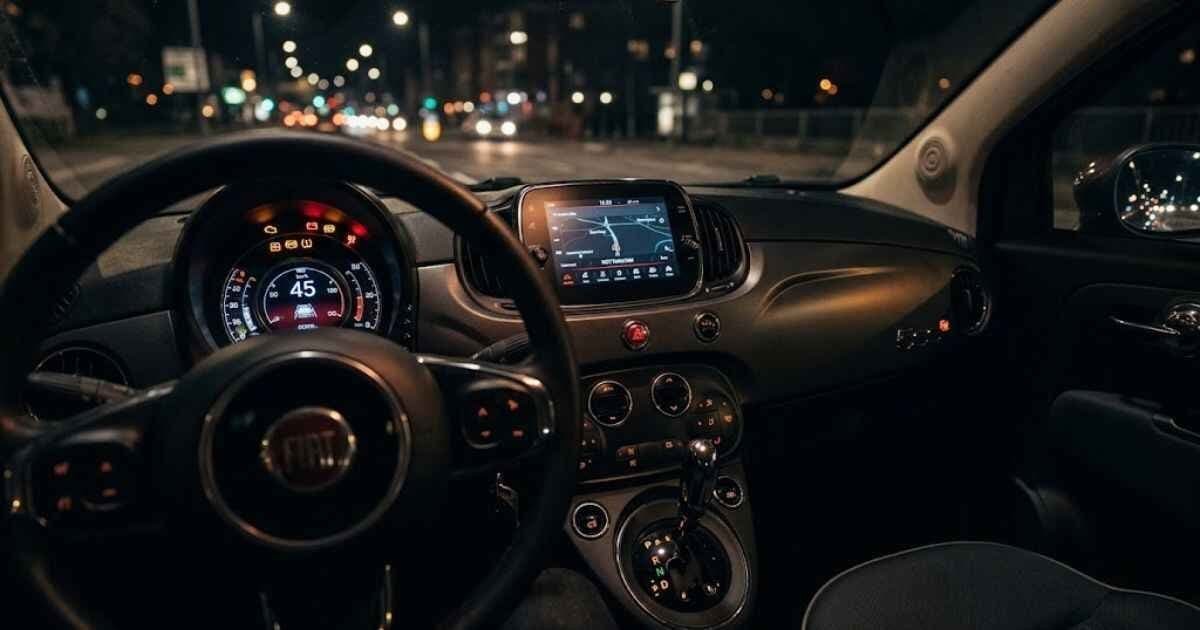
A light just appeared on your Fiat 500’s dashboard. Before you do anything else, look at the color.
Fiat 500 warning lights use a simple color code to tell you exactly how urgent the situation is. Red means act now. Amber or yellow means get it checked soon. Green and blue are just status indicators showing a feature is active, not warnings at all.
The exact symbols on your car depend on the model year, engine type, trim level, and market. A 2012 Fiat 500 Pop has different systems from a 2023 Fiat 500e. So if a symbol in this guide doesn’t match what you’re seeing, your owner’s handbook for your exact vehicle takes priority over any generic guide online.
Quick Answer: Fiat 500 Warning Light Colors at a Glance
Red: Stop safely or take immediate action. Oil pressure, overheating, and brake warnings are the three you never ignore.
Amber/Yellow: A fault needs attention soon. The car may still be driveable, but don’t let it sit for weeks.
Green: A system is active and working normally. Not a warning.
Blue: A lighting function is on, usually high beams.
Flashing: More urgent than a steady light of the same color in most systems.
Flashing check engine light: Stop driving. This usually means an active misfire.
This guide covers petrol Fiat 500 models. It does not cover Fiat 500e-specific battery management or high-voltage system warnings, which require separate documentation.
What the Colors Actually Mean Before You Even Read the Symbol
The color of a Fiat 500 warning light tells you the urgency level before you’ve identified the symbol. Red warnings generally require immediate action or stopping. Amber warnings signal that a fault or condition should be investigated soon. Green and blue indicators confirm an active feature rather than a problem.
That color-first approach works for almost every scenario. If it’s red and something feels wrong with how the car drives, steers, or stops, don’t second-guess it.
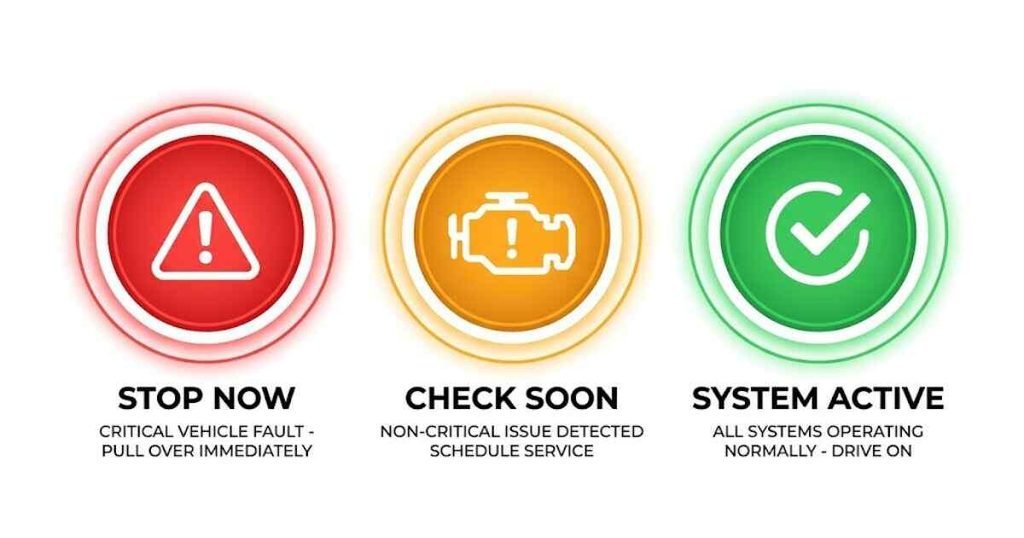
One thing that surprises most Fiat 500 owners: the same symbol can appear in different colors on different trims. A brake symbol in amber means something different from a brake symbol in red. Always note the color alongside the shape.
Red Warning Lights: Stop or Act Immediately
Oil Pressure Warning
This is the most serious warning on the Fiat 500.
It does not mean you need an oil change. Oil pressure and oil level are different things. Low oil pressure means the engine isn’t receiving adequate lubrication right now, and engine damage starts within 60 to 90 seconds of continued driving.
What to do: Pull over safely, switch the engine off, and check the oil level only once the car is on level ground and it’s safe to open the hood. If the oil level is normal and the warning stays on, don’t restart and drive. The car needs diagnosis before it moves again.
Typical repair costs if ignored: A seized engine on a Fiat 500 runs $3,000 to $6,000. A low-oil-pressure sensor replacement runs $80 to $180. The difference between those outcomes is whether you stopped.
Engine Temperature Warning
Overheating doesn’t always feel dramatic. The engine can still pull normally for a few minutes while internal temperatures climb to damaging levels.
What to do:
- Reduce engine load immediately and turn off air conditioning.
- Pull over somewhere safe and switch the engine off.
- Wait at least 20 minutes before opening the hood.
- Never open a hot cooling-system cap. Steam under pressure causes serious burns.
- Check coolant level only when the system is cool and safe to inspect.
Coolant leaks and a failed thermostat are the two most common causes on the Fiat 500. A thermostat replacement runs $120 to $250. A head gasket failure caused by continuing to drive while overheating runs $900 to $1,800.
Battery or Charging Warning
The battery icon should come on briefly when you switch the ignition on, then go out when the engine starts. If it stays on while driving, the charging system has a fault.
Possible causes include alternator failure, a loose or broken serpentine belt, wiring problems, or a battery that can no longer hold charge. The car can keep running temporarily on stored battery power, but that window closes faster than most people expect. Headlights, the stereo, air conditioning, and heated seats all accelerate the drain.
What to do: Switch off non-essential electrical loads and drive directly to a safe location or a shop. Don’t park somewhere remote and assume you’ll diagnose it tomorrow. Alternator replacement on a Fiat 500 runs $250 to $500 including labor.
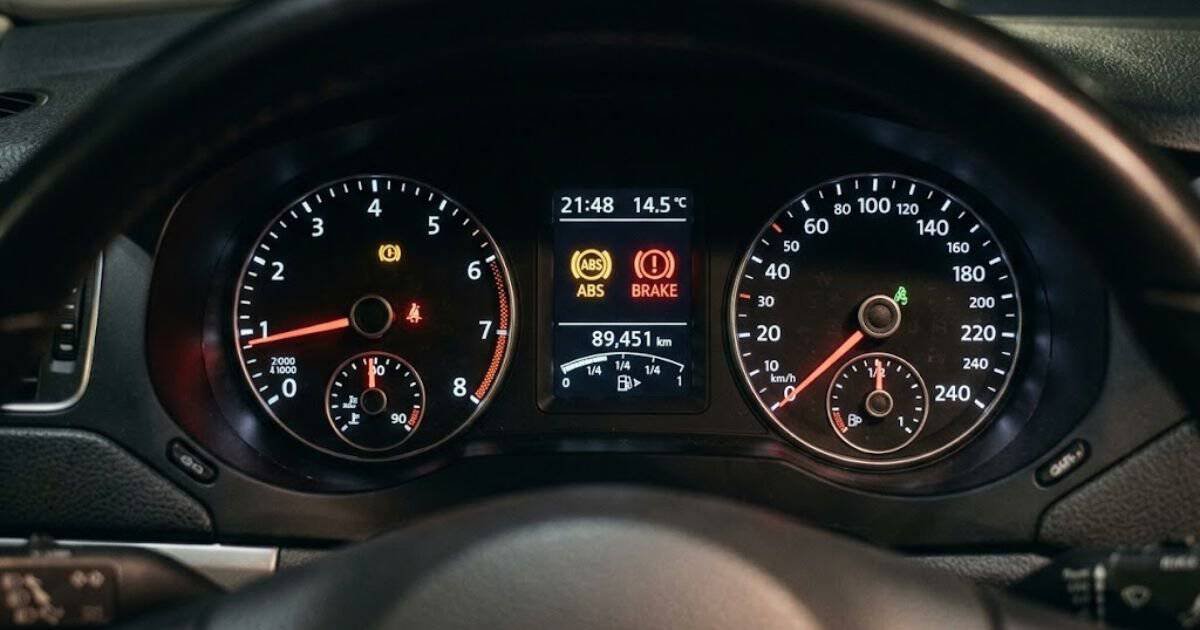
Brake System Warning
Here’s the thing: the brake warning light can mean two very different things on the Fiat 500.
If the handbrake is still engaged, that’s the most likely cause. Release it completely and see if the light goes out. If it does, there’s no fault.
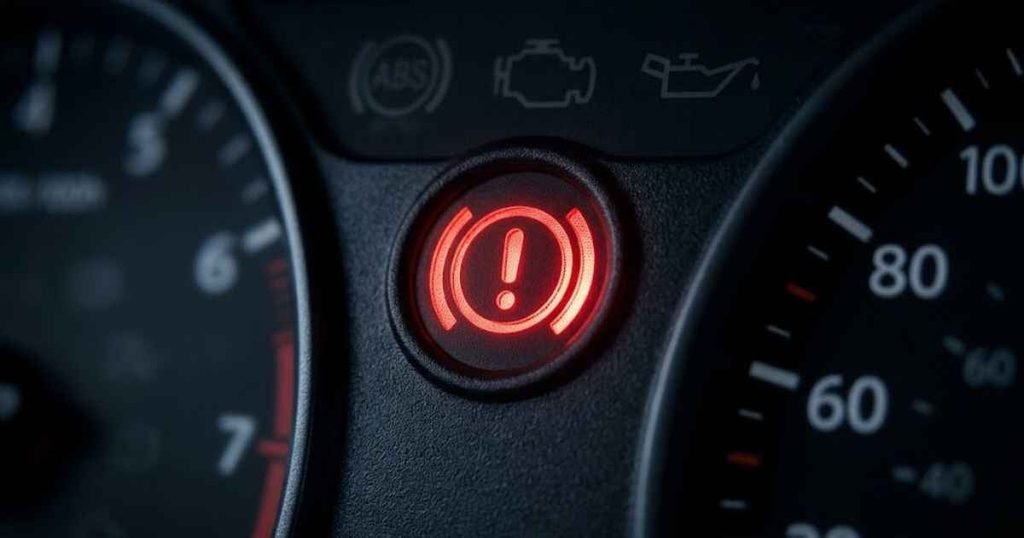
If the light stays on after the handbrake is fully released, the braking system needs inspection. Low brake fluid can indicate a leak in the system, which is a safety issue, not a maintenance item.
Stop driving if: The brake pedal feels soft, spongy, or goes further toward the floor than usual. That is a same-day emergency.
Seat-Belt Warning
Red, audible, and persistent. Fasten the applicable seat belts. This one is exactly what it looks like.
Amber Warning Lights: Get It Checked Soon
Check Engine Light (Malfunction Indicator Light)
Steady amber means a fault code has been stored in the engine management or emissions system. The car is usually still driveable, but don’t ignore it for more than a week.
Flashing amber means an active misfire is happening right now. A misfiring engine can destroy the catalytic converter within minutes of continued driving. Pull over safely.
An OBD-II scanner reads the fault code behind this light. Common codes on the Fiat 500 include P0420 (catalytic converter efficiency), P0300 series (misfires), and EVAP-related codes like P0442 from a loose fuel cap. A loose gas cap is worth checking first before assuming anything expensive. how a loose gas cap triggers the check engine light
Don’t erase the code without finding out why it appeared. The light will return.
ABS Warning Light
The anti-lock braking system has detected a fault. Your regular brakes still work. ABS assistance may be unavailable, which means stopping distance could increase on wet or slippery surfaces.
Most common cause on the Fiat 500: a faulty wheel speed sensor, typically $150 to $350 to replace depending on which corner of the car and labor rates.
Can you drive it? Yes, for short distances, if braking feels completely normal. Avoid highway driving and slippery conditions until it’s diagnosed.
If the ABS warning appears alongside the brake warning light or the brake pedal feels different, stop and have it inspected before driving further.
Airbag Warning Light
The airbag and restraint system has detected a fault.
Or maybe I should say it this way: this one feels easy to ignore because the car drives completely normally with this light on. That’s exactly why people ignore it, and why they shouldn’t. A restraint system fault can affect whether airbags or seat-belt pretensioners deploy correctly in a crash. That’s not a consequence to gamble on.
Common OBD code: B0001 series (airbag deployment loop fault) or B1001 (occupant classification system). Diagnosis runs $80 to $120. Don’t just reset this one without finding the cause.
Tire Pressure Warning (TPMS)
One or more tires are at least 25 percent below the recommended cold inflation pressure.
Check all four tires with a pressure gauge rather than guessing which one looks flat. Inflate to the pressure listed on the sticker inside the driver’s door, not the maximum pressure stamped on the tire sidewall. Those are different numbers.
If the warning stays on after inflating, the TPMS sensor itself may need resetting or replacing. Sensor replacement on a Fiat 500 typically runs $60 to $150 per wheel.
Fuel Warning Light
Almost empty. Refuel soon. This is not a mechanical fault.
Quick note: repeatedly running the Fiat 500 down to the last few miles of range forces the fuel pump to pull from the very bottom of the tank, where sediment collects. A consistent refuel-when-low habit costs more over time than it saves.
Start and Stop Warning Light
Some Fiat 500 versions have an automatic Start and Stop system that cuts the engine at traffic lights to save fuel. When this system is temporarily unavailable, an amber warning appears.
This is not an engine fault. Common triggers include a battery below its charge threshold, the air conditioning being on full, or the engine not yet at operating temperature. The system reactivates automatically once conditions allow.
If the Start and Stop warning remains on for multiple drive cycles, have the battery and system tested. The system leans heavily on a healthy battery.
Oil Deterioration Warning
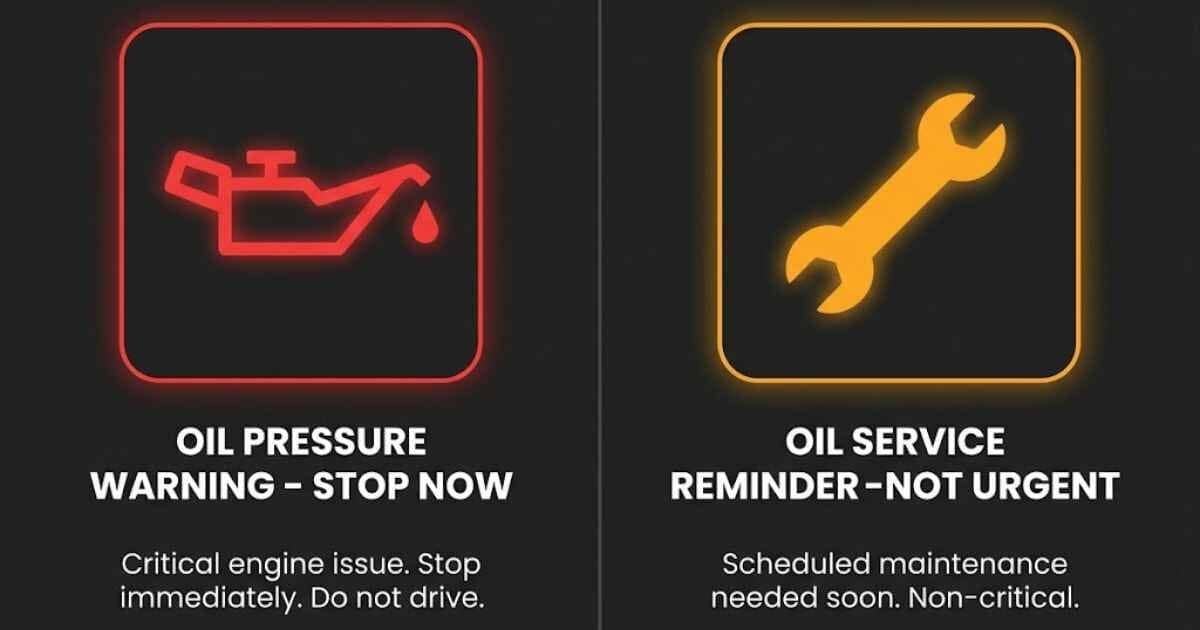
This is a different light from the oil pressure warning, and the difference matters.
Oil pressure is about lubrication right now. Oil deterioration is about the condition of the oil after extended use, particularly with short trips where the engine never fully warms up.
Follow the service instructions for your specific engine rather than treating every oil-related symbol the same way. Confusing these two has led to people ignoring an oil pressure warning because they thought it was just a “service reminder.”
Door, Bonnet, or Boot Warning
A door, bonnet, or boot is not fully closed.
Stop safely and check each door, the boot lid, and the bonnet latch. If everything is properly shut but the warning stays on, a door latch sensor is likely faulty. This is a $30 to $100 fix, not an urgent safety issue, but worth sorting before a bonnet pops open on the motorway.
Fiat 500 Warning Lights: Drive, Stop, or Check Soon?
| Warning Light | Color | Safe to Drive? | Urgency |
|---|---|---|---|
| Oil pressure | Red | No, stop now | Immediate |
| Engine temperature | Red | No, stop and cool | Immediate |
| Battery/charging | Red | Short distance only | Same day |
| Brake system (light stays on) | Red | Stop if pedal feels odd | Same day |
| Check engine (flashing) | Amber | No | Same day |
| Check engine (steady) | Amber | Usually yes, drive cautiously | Within a week |
| ABS | Amber | Yes, short trips only | Within 2 to 3 days |
| Airbag | Amber | Yes, but arrange diagnosis | Soon |
| Tire pressure | Amber | Yes, check pressure now | Today |
| Fuel reserve | Amber | Yes, refuel | Today |
| Start and Stop fault | Amber | Yes | When convenient |
| Seat belt | Red | Fasten before moving | Now |
| Door or bonnet | Red | Stop and close the opening | Now |
These are general guidelines. Your specific model year and equipment can change the correct response, so check the owner’s handbook when in doubt.
What to Do When a Warning Light Comes On: The Four-Step Check
To respond correctly to any Fiat 500 warning light, follow these steps:

- Note the color: red, amber, or green.
- Check whether the light is steady or flashing.
- Feel how the car is driving: braking, steering, acceleration, and any smells or sounds.
- If red or flashing, stop safely. If amber and the car drives normally, drive to a safe location and scan for codes.
Look, if you’re sitting in a Fiat 500 with a warning light on and wondering whether to drive home or call for help, here’s what actually works: focus on whether the car drives, brakes, and steers normally. If any of those three feel different from usual, stop. If the car feels completely normal, the odds are in your favor that you have a sensor fault or a non-urgent system warning rather than a mechanical emergency.
Two warnings appearing together always tells you more than either one alone. A check engine light alongside a transmission-related warning deserves a full diagnostic scan, not just a code clear and a hope it doesn’t come back.
How to Identify a Symbol You Don’t Recognise
Note these details before you search or call anyone:
- Model year and engine type
- Fuel type (petrol, diesel, or electric)
- Transmission (manual or automatic)
- Exact shape of the dashboard symbol
- Color and whether it is steady or flashing
- Any text message on the instrument display
- Any change in how the car drives, sounds, or smells
The more specific you are, the faster you get the right answer. Fiat’s official eLUM system provides owner documentation and manuals for all Fiat vehicles.
Frequently Asked Questions
What does a red warning light mean on a Fiat 500?
Red means stop or take immediate action. Oil pressure, overheating, and brake system warnings are the three red lights you should never continue driving with. Pull over safely and investigate before restarting.
Why is my Fiat 500 check engine light flashing?
A flashing check engine light almost always means an active engine misfire. Stop driving. A misfire can damage the catalytic converter within minutes, turning a manageable repair into a much more expensive one.
Should I keep driving my Fiat 500 with the ABS light on?
Yes, for short distances, if your brakes feel completely normal. Regular braking still works without ABS. Avoid wet roads and highways until it’s fixed, and get a wheel speed sensor check done within a few days.
Why is the battery light on in my Fiat 500 after starting the engine?
The battery light staying on after startup usually means the alternator is not charging the battery. The car can keep running on stored battery power for a short time. Drive directly to a shop and switch off non-essential electrics to extend that window.
When should I stop driving my Fiat 500 immediately?
Stop for red oil pressure, red engine temperature, a brake warning with a soft pedal, or a flashing check engine light. Those four situations can all cause serious and expensive damage within minutes of continued driving.
The Bottom Line
Red warning lights on the Fiat 500 deserve immediate attention. Amber warnings give you some time, but not unlimited time. The ones you really can’t afford to ignore are oil pressure, engine temperature, the brake warning when the handbrake is released, and any flashing check engine light.
For everything else, check the color, match the symbol to this guide, and use an OBD-II scanner to read the actual fault code before spending money on parts or repairs.
If the symbol you’re seeing doesn’t match anything here, use your owner’s handbook for your exact model year. The Fiat 500 has run through enough generations that generic guides, including this one, will occasionally show you a symbol that belongs to a different version than yours.

4 thoughts on “Fiat 500 Warning Lights: What Every Dashboard Symbol Is Telling You”