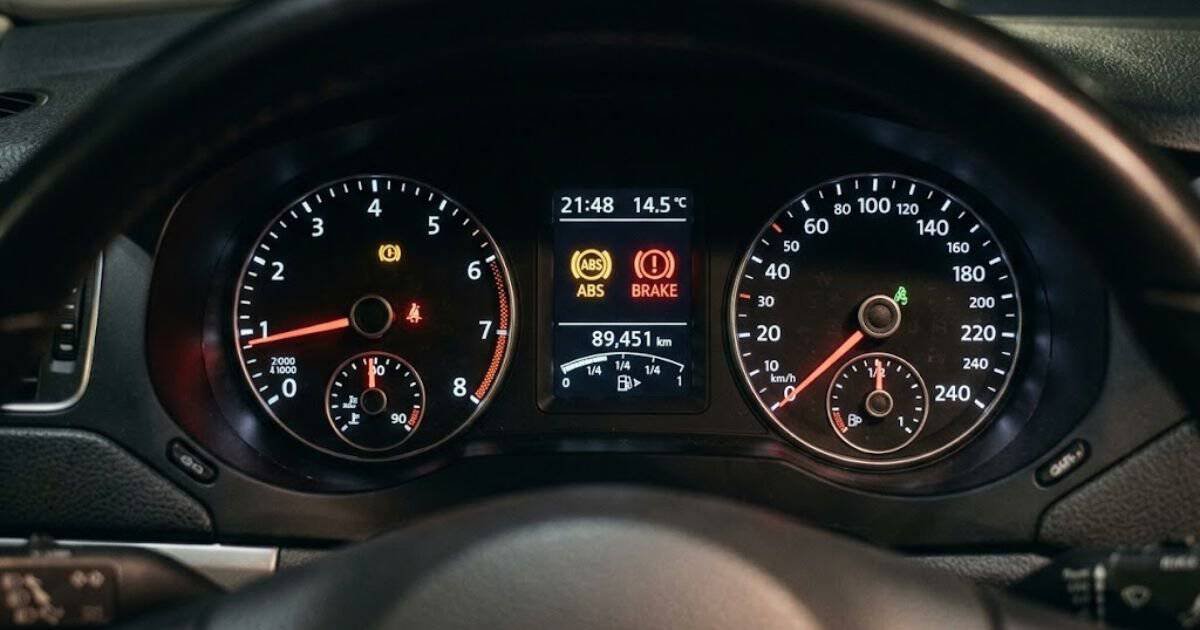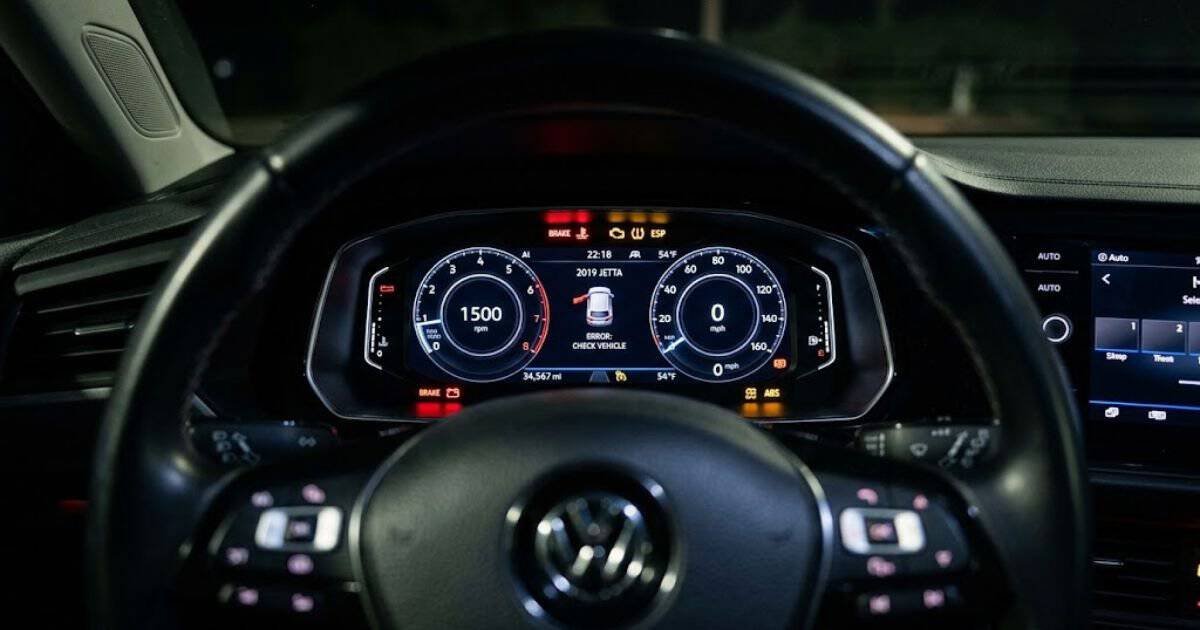
So something just lit up on your 2019 Jetta’s dashboard. Maybe it’s a symbol you’ve never seen before. Maybe it came on out of nowhere and you’re not sure if it means “call a tow truck” or “relax, it’s nothing.”
VW Jetta Warning Lights 2019
Here’s what we want you to know first: the 2019 Jetta was the first model year of the completely redesigned MK7 generation, and it brought a handful of new warning icons that older Jetta guides simply don’t cover. Driver-assist lights like Front Assist, Lane Assist, and Side Assist all appear as standard or optional features on the 2019, and they look nothing like the classic symbols most people are used to seeing.
Quick Answer
2019 VW Jetta warning lights use color and flash patterns to show urgency. Red usually means stop safely, while yellow or orange usually means the car needs attention soon. Driver-assist warnings often mean a sensor or assistance system is unavailable rather than an engine failure.
- Red light: Stop driving safely and shut off the engine. Pay special attention to red oil pressure, coolant temperature, or brake warnings.
- Yellow or orange light: You can usually finish your current trip if the Jetta is running normally, but have the warning diagnosed soon.
- Driver-assist warning: Icons for Front Assist, Lane Assist, or similar systems can mean a sensor is blocked, dirty, or unavailable. Check the sensor and windshield camera area first.
- Flashing light: A flashing check engine light can indicate an active engine misfire. Reduce driving and seek professional help promptly.
Drive or stop? If the warning is red or the check engine light is flashing, stop safely and get help. A steady yellow or orange warning is generally less urgent when the Jetta runs normally, but it should still be diagnosed.
This guide covers all warning lights specific to the 2019 VW Jetta (MK7). It doesn’t cover older MK6 models (2011 to 2018), and it doesn’t address recall-specific codes, which VW communicates separately through the myVW app.
How the 2019 Jetta Color System Works
VW Jetta warning lights for 2019 follow a three-color urgency system: green lights are informational, yellow or amber lights mean service is needed soon, and red lights require you to stop driving immediately. The 2019 model uses this same traffic-light logic but adds a full set of new icons for its driver-assist technology that previous Jetta generations never had.
The 2019 Jetta introduced a redesigned instrument cluster and, on higher trims, an optional 10-inch Digital Cockpit display that shows icons in sharper resolution with color differentiation built in. According to TechRadar’s review of the 2019 Jetta’s Digital Cockpit, the display was designed specifically so drivers could keep their eyes forward rather than scanning to the center console, making icon legibility a core design priority.
That matters for you right now because the icon you’re seeing isn’t just cosmetic. The color it’s displayed in tells you exactly how urgently VW wants you to act.
Quick note: if your Jetta shows a white or gray icon, that’s just a system status indicator, not a warning. White means a system is active and working normally.
Yellow and Amber Warning Lights: Service Needed Soon
These are the lights that don’t require you to pull over immediately but do require attention within a few days. Most of them can wait until you finish your errands. None of them should be ignored for weeks.
ABS Light
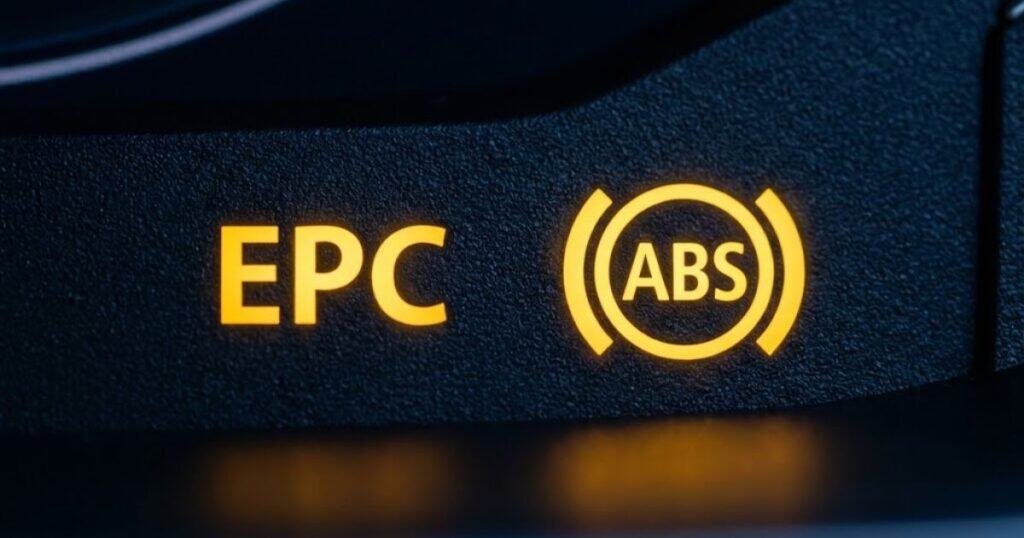
Indicates a fault in the anti-lock braking system. Your regular brakes still work. ABS assistance may be disabled, which means your stopping distance could increase on wet or slippery roads.
Common OBD codes: C0035 or C0040 (wheel speed sensor faults). Repair cost: $150 to $600 depending on whether it’s a sensor or the ABS module.
Can you drive it? Yes, for short trips. Don’t push it on highways or in bad weather.
EPC Light (Electronic Power Control)
This one confuses more 2019 Jetta owners than almost any other. When the EPC light comes on, it means there’s something wrong with your throttle system, and it often appears alongside reduced engine power. It’s not a generic warning. It’s specific to the electronic throttle, accelerator pedal sensor, or related components. Volkswagen of Canton
Common triggers: dirty throttle body, failing accelerator pedal sensor, or a wiring fault. Repair costs range from $30 for a sensor to $400 for a throttle body replacement.
Can you drive it? Usually yes at reduced power. Skip highway driving until it’s diagnosed.
Check Engine Light
Broad. Could be a $15 gas cap or a $1,500 catalytic converter. You won’t know until you scan it.
Steady light: Drive normally and get it scanned within a day or two. Flashing light: Stop driving. An active misfire can destroy the catalytic converter within minutes.
TPMS (Tire Pressure)
One or more tires are 25 percent or more below the recommended cold inflation pressure. Check all four tires with a gauge right away rather than guessing which one is low.
Brake Pad Wear Indicator
Pads are thin. Budget $150 to $300 per axle. Ignoring this long-term turns a brake job into a brake-and-rotor job, which roughly doubles the cost.
Airbag Light
A fault in the supplemental restraint system. Your airbags may not deploy in a crash. Diagnosis runs $80 to $150; repair ranges from $200 to $600 depending on the component.
Red Warning Lights: Stop the Car
Red lights are urgent. Not “pull into the next parking lot when it’s convenient.” Pull over safely, turn off the engine, and figure out next steps before driving further.
- Oil Pressure Light: No oil pressure detected. Engine damage begins within 60 to 90 seconds of continued driving. This is the one red light where seconds genuinely matter.
- Coolant Temperature Light: Engine is overheating. Stop, let it cool completely, then check the coolant reservoir level before attempting to drive anywhere.
- Brake System Light: Could be an engaged parking brake, low brake fluid, or a system fault. Confirm the parking brake is fully released before assuming a mechanical problem.
- Battery/Charging Light: The alternator has likely failed. You’re running on battery reserve. You may have 20 to 30 minutes of drive time at most before the car stalls.
- Power Steering Light: Red and solid means the power steering assist has failed completely. The car can still be steered but takes significantly more effort, especially at low speeds.
According to Volkswagen’s official warning light documentation, the steering warning light can appear as yellow solid (reduced assist), yellow flashing (electronic steering column lock fault), or red solid (power steering assist failure). Each shade and flash pattern is a different problem with a different urgency level. nhtsa
The 2019-Specific Lights That Older Guides Miss
Here’s where most generic Jetta guides let you down. The 2019 MK7 was the first Jetta to come standard with Front Assist on most trims and Lane Assist as an option. Those systems produce warning icons that look nothing like classical automotive warning symbols, and they’re frequently the lights that 2019 owners search about most.
Front Assist / Forward Collision Warning
Icon: A small car from behind with triangular warning lines in front of it.
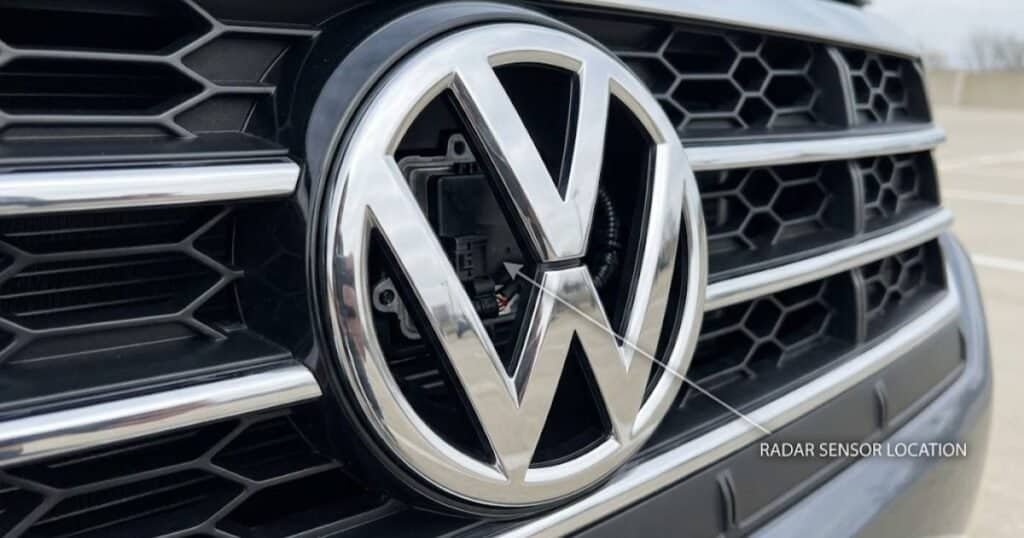
This warning indicates blocked or malfunctioning front sensors, often due to snow, ice, or dirt covering the radar or camera units near the front grille. The most common trigger is debris on the sensor, not a component failure. VW Vortex
To reset a Front Assist “not available” warning on a 2019 Jetta, follow these steps:
- Pull over safely and turn off the engine.
- Locate the front radar sensor behind the VW badge on the front grille.
- Clear any snow, ice, mud, or debris from the sensor area and the lower windshield.
- Restart the car and drive above 30 mph for a few minutes to allow the system to recalibrate.
- If the warning returns, have the sensor calibration checked at a VW dealer.
Can you drive it? Yes. Front Assist being unavailable doesn’t affect normal driving or braking. According to a VW technician, a failed Front Assist sensor does not affect normal driving, and on a 2019 Jetta still under the factory warranty, this repair is covered at no cost. Street Volkswagen
Lane Assist Warning
Icon: A steering wheel with hands on it, or a car positioned between two lane lines.
Appears when the camera behind the rearview mirror can’t read lane markings clearly, usually because of rain, sun glare, faded road paint, or a dirty windshield. Clean the windshield near the rearview mirror and drive in clearer conditions to clear it.
Side Assist (Blind Spot Monitoring)
Icon: A car with a highlighted rear quarter panel.
Yellow means the system has a fault. White or green means it’s active and working. A yellow Side Assist light most often means a dirty rear bumper sensor. Clean both rear corners of the bumper and see if it clears.
Or maybe I should say it this way: none of these three driver-assist warnings are mechanical emergencies. They’re sensor alerts. The car drives completely normally without them. Get them looked at soon, but don’t let them ruin your day.
How to Read the Codes Behind Any Light
Knowing the color and shape of a warning light is step one. Reading the actual OBD code behind it is step two, and it takes about 60 seconds with the right tool.
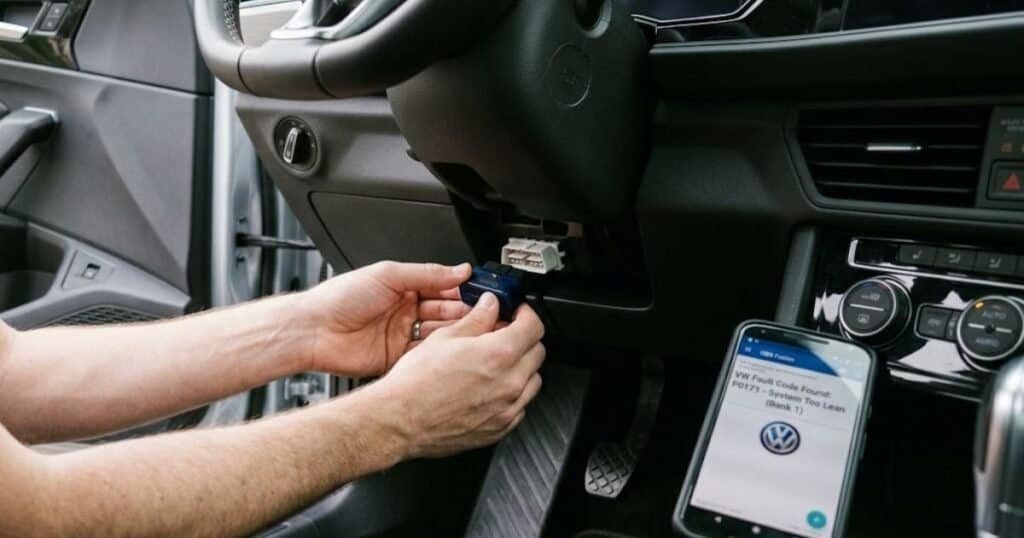
Quick Comparison: OBD Scanning Options for 2019 Jetta Owners
| Option | Best For | Key Benefit | Limitation |
|---|---|---|---|
| BlueDriver | DIY owners who want full detail | Reads VW manufacturer-specific codes, not just generic OBDII | Higher upfront cost ($100+) |
| FIXD | Occasional users, first-time scanners | Simple app, low cost ($20-$60) | Less depth on VW-specific fault codes |
| Free store scan | One-time check (AutoZone, O’Reilly) | No cost at all | Staff may only clear the code, not explain root cause |
| VW dealer diagnostic | Complex, recurring, or warranty issues | Full manufacturer-level access | $150+ diagnostic fee, often not credited to repair |
What most guides skip is that a code scanner gives you the exact fault code, which tells you whether a yellow light is a $20 fix or a $500 fix before you ever call a shop. For 2019 Jetta owners seeing EPC, ABS, or EVAP-related lights, that distinction matters a lot.
Drive-or-Stop: The Fast Reference Table
| Warning Light | Color | Safe to Drive? | Urgency |
|---|---|---|---|
| Oil Pressure | Red | No — stop now | Immediate |
| Coolant Temperature | Red | No — stop now | Immediate |
| Battery/Charging | Red | Short distance only | Same day |
| Check Engine (flashing) | Amber | No | Same day |
| EPC | Amber | Yes, reduced power | Within 2-3 days |
| ABS | Amber | Yes, short trips | Within a week |
| Check Engine (steady) | Amber | Yes | Within a week |
| Front Assist | Amber | Yes | Check soon |
| Lane Assist | Amber | Yes | When convenient |
| TPMS | Amber | Yes, check tires now | Today |
| Brake Pads | Amber | Yes | Within a month |
Frequently Asked Questions
It can indicate a Front Assist or Lane Assist sensor fault. Clean the front grille sensor area and the windshield camera area first. If the warning stays on, have the system inspected and the sensor calibration checked.
The EPC light points to a fault in the Electronic Power Control system. Possible causes include a throttle problem, accelerator pedal sensor fault, or related electrical issue. The Jetta may also run with reduced power. Scan it for diagnostic trouble codes and arrange a diagnosis soon.
Clean the radar sensor area behind the front VW badge and check the camera area near the rearview mirror for dirt, snow, or ice. Restart the Jetta and allow the system to reassess the sensors. If the warning returns, the system may need professional diagnosis or sensor calibration.
No. A flashing check engine light can indicate an active engine misfire that may damage the catalytic converter if you continue driving. Stop safely and arrange prompt diagnosis. If the Jetta is running badly or shaking, towing is the safer option.
Stop safely when a serious red warning appears, especially an oil-pressure or coolant-temperature warning. These warnings can signal conditions that may cause severe engine damage if you continue driving. Check the owner’s manual and arrange assistance before continuing.
The Bottom Line
Look, if you’re sitting there staring at a light you’ve never seen before on your 2019 Jetta, chances are it’s one of the new driver-assist icons that older guides don’t even mention. Those won’t leave you stranded. Clean the sensor, restart the car, and see if it clears.
If it’s a red light, that’s a different conversation. Stop the car, check the basics (oil level, coolant level, parking brake), and get it looked at before driving further.
And if you want to know the exact code behind any amber light before you call a shop, a BlueDriver or FIXD scanner tells you in under a minute. That’s almost always worth doing before spending $150 just to have someone else read it for you.