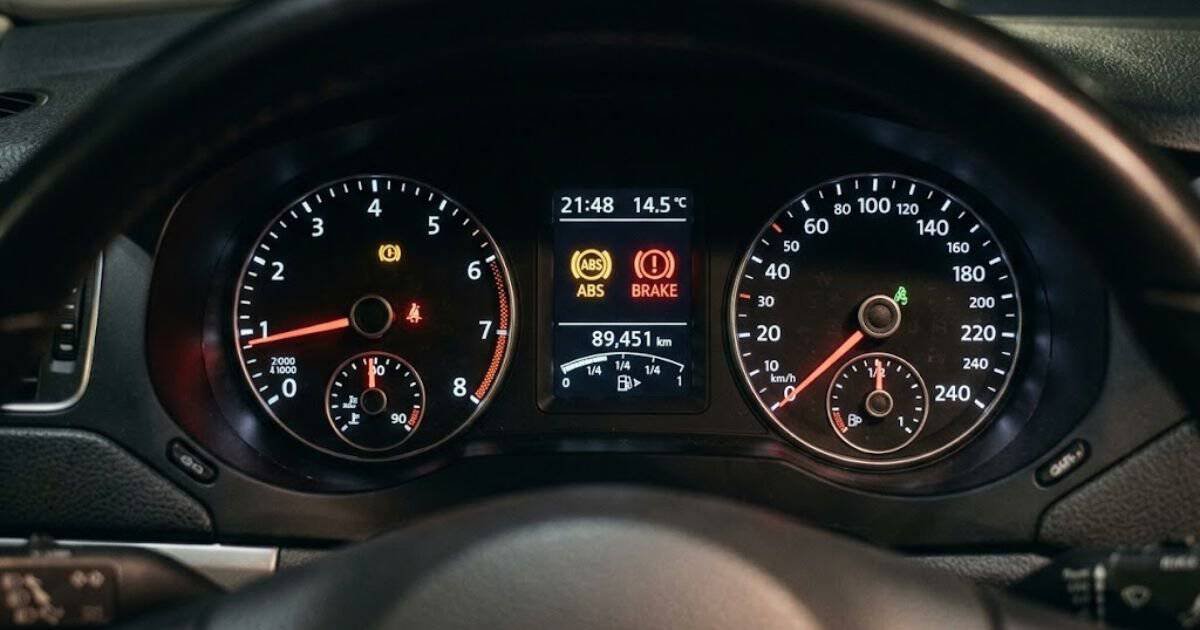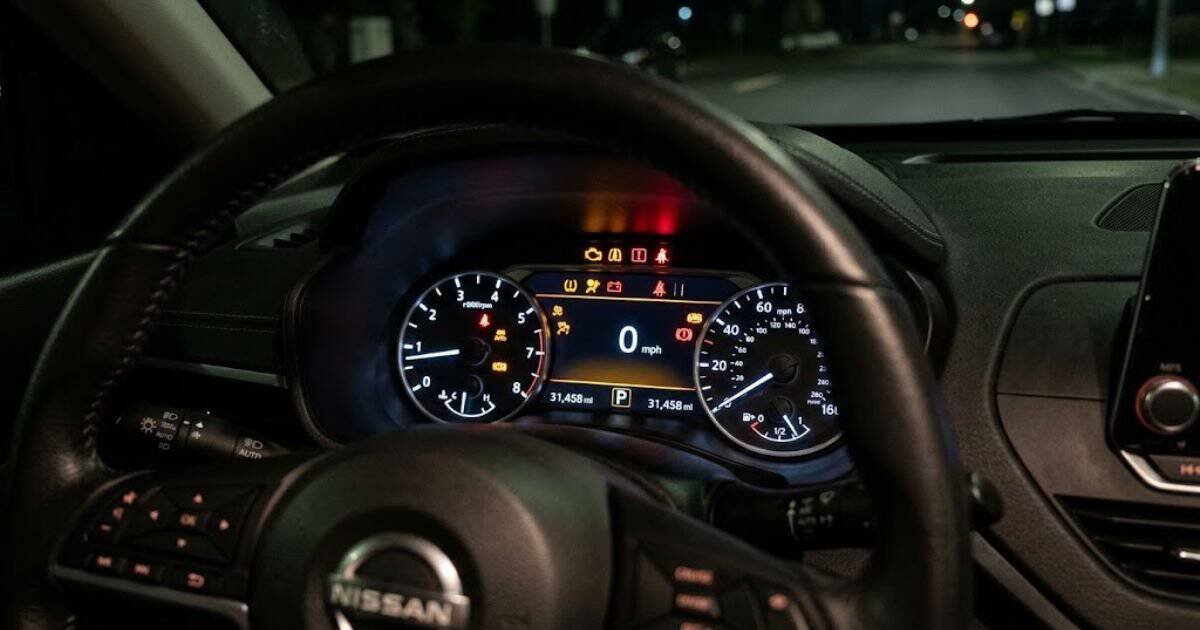
A light just came on. You’re in the car, probably on your phone right now, and you want a straight answer before you decide whether to keep driving or pull over.
Good news: most Nissan Altima warning lights are not emergencies. The color tells you how urgent it is, and the shape tells you which system triggered it. This guide walks you through every common light, what it means for your specific situation, and what happens if you ignore it.
Quick Answer
- Red light: Pull over safely, shut off the engine, investigate before driving further.
- Yellow or amber light: You can usually finish your trip, but get it checked within a few days.
- Flashing check engine light: Stop driving. This means an active misfire that can damage your catalytic converter fast.
- CVT warning light: A gear icon or “Transmission Malfunction” message should not be ignored. It needs same-day attention.
- ProPilot Assist or ADAS light: Sensor issue, not a mechanical fault. Safe to drive, get it calibrated soon.
This guide covers Nissan Altima models from 2019 onward, including all CVT and ProPilot Assist equipped trims. It does not cover older pre-2019 Altimas with analog clusters or the rare Altima hybrid models.
How the Nissan Altima Color System Works
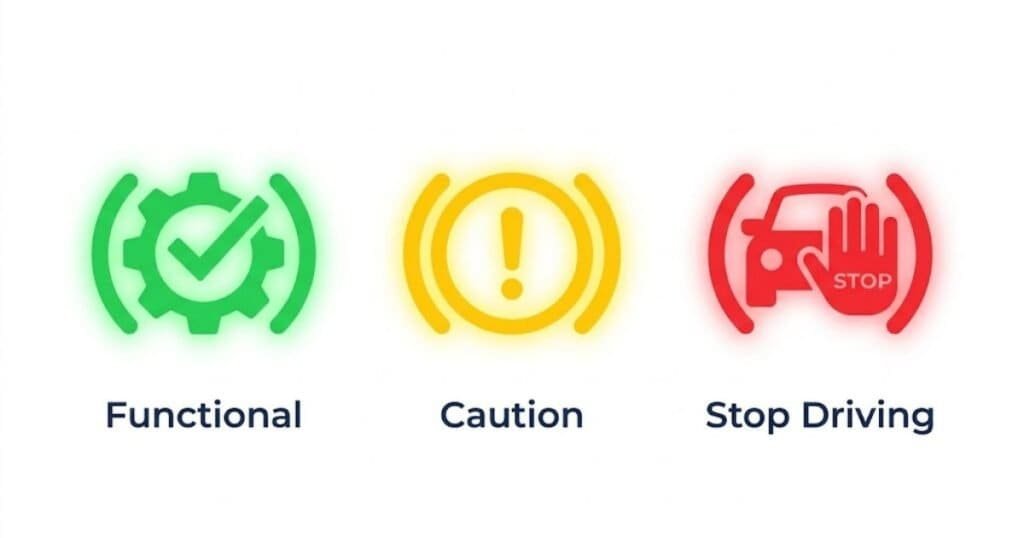
Nissan Altima warning lights use a three-color system to tell you exactly how urgent the situation is. Green means the system is functional and working normally, yellow encourages caution and means a service visit is needed soon, and red means you should consider pulling over immediately. That traffic-light logic is consistent across every Altima warning icon, so you can gauge urgency by color alone before you even look up what the symbol means. Nissannationpodcast
Altima models from 2019 onward introduced a full-color 7-inch Advanced Drive-Assist Display on higher trims, which shows icons in sharper resolution with color-accurate warning states built in. That means the same icon can appear in different colors on different trims, and each color means something different. A steering wheel icon in white means the system is active and fine. The same icon in yellow means a fault has been detected. dreamnissanlawrence
Here’s the thing: the Altima also has a Master Warning Light, which is an exclamation point inside a yellow triangle. That single light can mean seven completely different things depending on what message appears in the vehicle information display alongside it. Check the display every time you see it rather than assuming.
Or maybe I should say it this way: color first, shape second, display message third. That sequence gets you to the right answer faster than anything else.
Yellow and Amber Warning Lights: Service Needed Soon
Yellow lights mean your Altima needs attention, but it’s not telling you to stop the car right now. You’ve got time to finish your commute. You don’t have weeks.
ABS Warning Light
Icon: The letters ABS inside a circle.
If an ABS malfunction occurs, the anti-lock function is turned off and the brake system operates normally but without antilock assistance. Regular braking still works. Your stopping distance may increase on wet or slippery roads because the ABS won’t pulse the brakes for you. Rountreemoorenissan
Common OBD codes: C0035 or C0040, usually a wheel speed sensor. Cost to fix: $150 to $500 depending on whether it’s the sensor or the ABS control module.
Can you drive it? Yes, for short trips. Avoid highways and wet roads until it’s sorted.
Check Engine Light (Malfunction Indicator Light)
Icon: An outline of an engine block, sometimes labeled “Check Engine.”
Steady means a stored fault, probably EVAP or oxygen sensor related. Flashing means stop driving immediately because an active misfire is happening right now.
The check engine light may also come on steady if the fuel-filler cap is loose or missing, or if the vehicle runs out of fuel, so check the gas cap first before assuming anything expensive is wrong. Rountreemoorenissan
Can you drive it? Yes if it’s steady. No if it’s flashing. [INTERNAL LINK: check engine light after getting gas → what a loose gas cap actually does to your car]
Low Tire Pressure (TPMS)
Icon: An exclamation point inside a U-shape (flat tire profile).
One or more tires are at least 25 percent below the recommended cold inflation pressure. Check all four with a gauge right away. Don’t guess which one is low by feel alone.
Can you drive it? Yes, but check tire pressure immediately. Driving on a significantly underinflated tire at highway speed risks a blowout.
Power Steering Warning Light
Icon: A steering wheel next to an exclamation point.
If the light stays on while the engine is running, the steering will lack power assist and you should have it checked, though you will still have control of the vehicle. Expect noticeably heavier steering effort, especially at low speeds and in parking lots.
Can you drive it? Yes for short distances. Avoid situations requiring tight maneuvering until fixed. Repair cost: $200 to $600 for the electric power steering rack or sensor.
Slip Indicator (VDC Active)
Icon: A car with squiggly lines beneath it.
Brief flashing while driving on slippery surfaces is completely normal and means the Vehicle Dynamic Control system is actively limiting wheel spin to keep you stable. It’s doing its job. If it stays on solid with no slippery conditions present, the VDC system itself has a fault. Downtown Nissan
Can you drive it? Yes if it’s flashing briefly. If it’s solid with no slippery conditions, get it scanned.
CVT Warning Light (Transmission Malfunction)
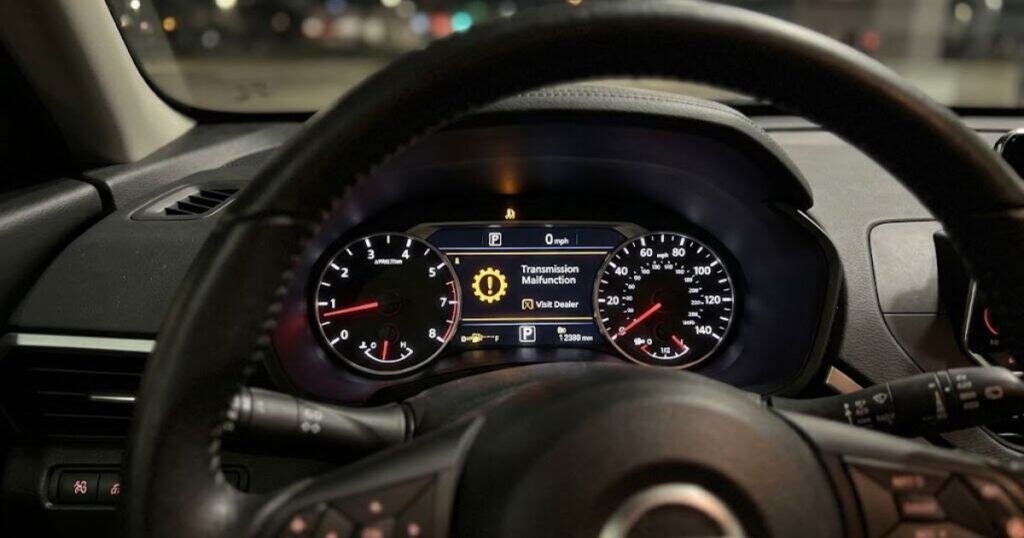
This is the one most Altima guides don’t cover, and it’s arguably the most important one to know about.
Icon: A gear symbol, or a text message reading “Transmission Malfunction” in the vehicle information display.
This light turns on when the Continuously Variable Transmission system detects a problem that may affect the car’s ability to shift or maintain smooth power delivery. The Altima’s CVT has a documented history of heat-related failures, particularly in older models driven hard in stop-and-go traffic. When this light appears, the transmission may enter a reduced-performance or “limp mode” to protect itself. Coulternissan
Can you drive it? Short distances only, and only to get to a shop. Do not ignore this one. Continuing to drive with a CVT fault can turn a $300 sensor fix into a $3,500 to $5,000 transmission replacement.
What most guides skip is that the CVT warning often appears alongside a temperature spike rather than a mechanical failure. Pulling over for 10 to 15 minutes to let the transmission cool down sometimes clears it temporarily, but it still needs a professional scan to rule out a deeper fault.
Red Warning Lights: Stop the Car
Red means stop. Not “finish the song” or “pull in at the next exit.” Find a safe spot, stop the engine, and figure out next steps from there.
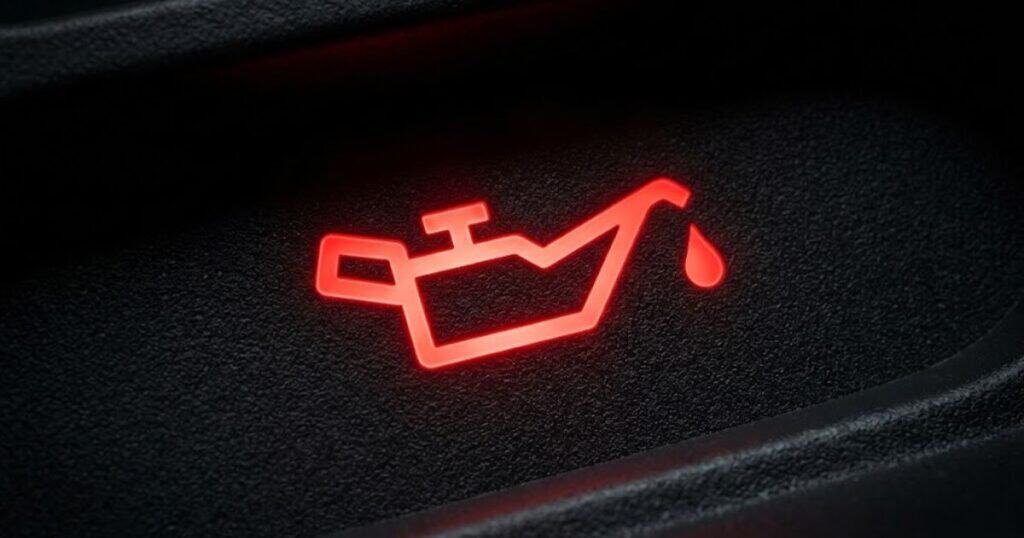
- Oil Pressure Light (oil can with drop): No oil pressure detected. Engine damage starts within 60 seconds of continued driving. This is the one red light where seconds genuinely matter.
- Engine Temperature Light (thermometer in liquid): Engine is overheating. Pull over, let it cool completely before opening the hood. Check coolant level only after the car cools.
- Brake Warning Light (exclamation in circle, or the word “BRAKE”): Could be the parking brake still engaged, low brake fluid, or a brake system fault. Check the parking brake first before assuming the worst.
- Charge Warning Light (rectangle battery icon): If this light comes on while the engine is running, it may indicate the charging system is not functioning properly, and you should check the generator belt for looseness or damage. You’re running on battery power only. Expect 20 to 30 minutes before the car stalls. Nissannationpodcast
- ProPilot Assist Red Warning (steering wheel with red hands): The ProPilot Assist system has detected a hands-off situation for too long. If the hands-off warning is ignored, the vehicle may apply the brakes and activate hazard lights automatically.
Some drivers assume every red light means the engine is about to fail catastrophically. That’s not always true. A red seatbelt light is a compliance reminder. A red parking brake light is just the parking brake being on. Oil pressure and coolant temperature are the two where every second you keep driving genuinely costs you money.
ProPilot Assist and ADAS Warning Lights
Newer Nissan Altima trims include ProPilot Assist, blind-spot monitoring, and adaptive cruise control, and these systems produce warning icons that many Altima owners have never seen explained in any guide. dreamnissanlawrence
To respond correctly to a ProPilot Assist or ADAS warning light, follow these steps:
- Note whether the light is white, yellow, or red.
- White means the system is active and working normally.
- Yellow means a sensor fault or obstruction has been detected.
- Clean the front camera area (inside windshield near rearview mirror) and front radar sensor.
- Restart the car and drive above 25 mph to allow the system to recalibrate.
- If the light returns, book a sensor calibration at a Nissan dealer or ADAS-certified shop.
When there is an issue with the ProPilot Assist system, a warning light appears on the dashboard represented by a steering wheel symbol with hands and lane markings, and this alert is specific to models equipped with ProPilot Assist. Dashboard Symbols
Key ADAS icons on the Altima:
| Icon | What It Looks Like | Meaning | Safe to Drive? |
|---|---|---|---|
| ProPilot Assist | Steering wheel with hands | System fault or unavailable | Yes, system is off |
| AEB Warning | Two cars bumping fenders | Camera blocked or system off | Yes, normal braking works |
| Lane Departure Warning | Car between lane lines | Camera can’t read road markings | Yes, system is off |
| Rear Automatic Braking | Car reversing toward cone | RAB system off or unavailable | Yes, normal reverse works |
| Blind Spot Warning | Car with highlighted quarter panel | Sensor blocked or fault detected | Yes, check mirrors manually |
Look, if you’re seeing a ProPilot or ADAS light and the car is driving completely normally, here’s what actually works: clean the windshield and front grille sensor, restart, and drive for five minutes. These systems fail safe by turning themselves off, not by affecting normal driving.
How to Read the Code Behind Any Warning Light
Knowing the color and icon gets you halfway there. Reading the actual OBD-II fault code behind the light gets you the rest of the way, including the exact component that triggered it and a realistic repair cost estimate before you call anyone.
Quick Comparison: OBD Scanning Options for Nissan Altima Owners
| Option | Best For | Key Benefit | Limitation |
|---|---|---|---|
| BlueDriver | DIY owners wanting full detail | Reads Nissan manufacturer-specific codes, not just generic | Higher upfront cost ($100+) |
| FIXD | First-time scanners, occasional use | Simple app pairing, low cost ($20-60) | Less depth on CVT-specific codes |
| Free store scan (AutoZone, O’Reilly) | One-time check | No cost | Staff may clear the code without explaining root cause |
| Nissan dealer diagnostic | Complex, CVT, or ProPilot issues | Full manufacturer-level access | $150+ diagnostic fee |
Frequently Asked Questions
Yellow means caution and service is needed soon. You can generally finish your current trip, but get the car scanned and inspected within a few days to avoid a small problem becoming expensive.
The CVT light means the transmission has detected a fault or is overheating. Drive only to the nearest shop. Ignoring it risks turning a minor sensor fix into a full transmission replacement costing thousands.
Check the gas cap first and tighten it firmly. If the light stays on after 3 to 5 drive cycles, use an OBD scanner to read the fault code. The light clears automatically once the underlying issue is fixed.
Yes, for short distances. Normal braking still works. Avoid highways and wet roads since the anti-lock assist is disabled and stopping distance may increase on slippery surfaces.
Stop immediately for red oil pressure or red engine temperature lights. Both can cause serious engine damage within minutes. Also stop for a flashing check engine light or a CVT transmission warning.
The Bottom Line
Most Altima warning lights give you time to deal with them calmly. The three that don’t: oil pressure, engine temperature, and the CVT warning. Those three need immediate action every time.
For everything else, check the color, match the icon to this guide, and scan the code with a BlueDriver or free store scanner before spending money at a shop. Knowing the exact code in advance means you walk in informed, and that almost always means a faster, cheaper repair.