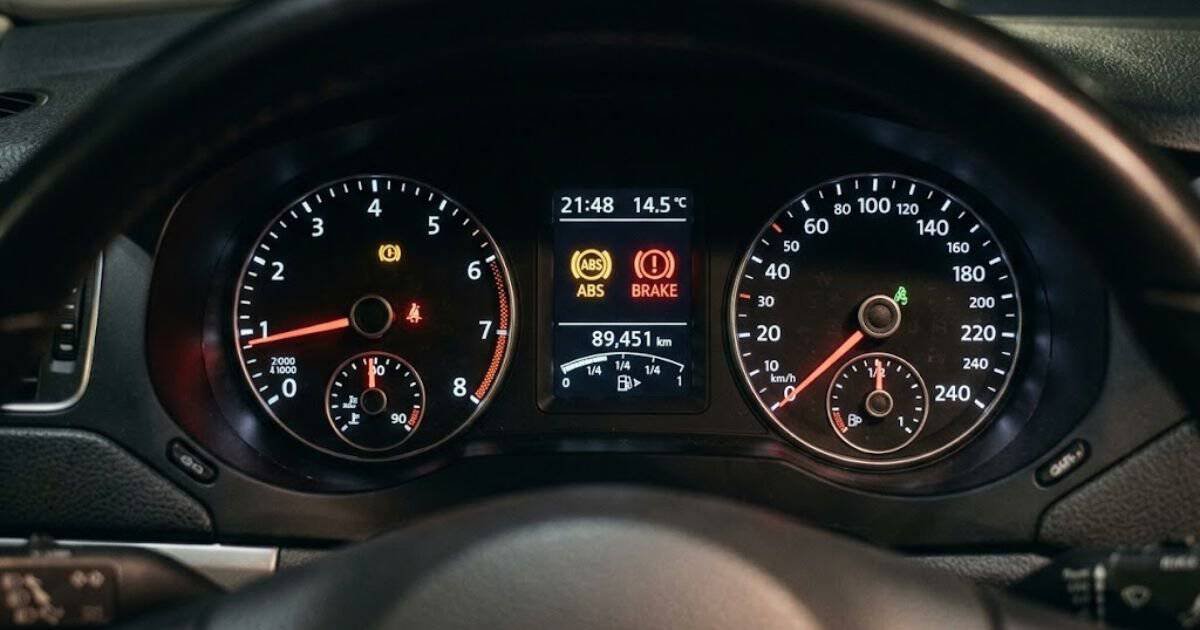
Why is my car stuttering comes down to one of three things not reaching the engine right: air, fuel, or spark. If it happens at idle, look at vacuum leaks or the idle air control valve. If it happens when you accelerate, suspect fuel delivery, a dirty injector, a weak fuel pump, or a bad mass airflow sensor. If it only shows up at highway speed, worn spark plugs or a failing ignition coil are the usual suspects. A steady check engine light means drive carefully to a shop. A flashing one means stop now, before a misfire cooks your catalytic converter.
In this article, we’ll cover:
- What it means when your car stutters
- The most common causes, organized by when it happens
- When it’s safe to keep driving, and when it isn’t
- How to diagnose it yourself before paying for a shop visit
What Does It Mean When Your Car Stutters?
A stuttering car hesitates, jerks, or briefly loses power instead of running smooth. You might feel a shudder, hear the engine catch and recover, or notice the RPMs dip for a second.
This almost always means the combustion process is being interrupted. Air, fuel, and spark aren’t meeting up the way they should, and where in your drive the stutter happens is the fastest clue to which one is off.
why is my car stuttering
Common Causes, Organized By When They Happen
Most articles list ten possible causes with no way to tell them apart. Here’s the thing: when the stutter happens narrows it down fast, because idle, acceleration, and highway driving each stress different parts of the engine. A part that’s marginal at idle can run fine under load, and a part that’s fine at idle can fail the moment you ask it for more fuel or spark. That’s why guessing from a flat list wastes time and money.
Car Sputtering at Idle
- Idle air control valve, dirty or failing, throws off the small amount of air the engine needs while stopped
- Vacuum leak, a cracked hose or intake gasket lets in unmetered air the computer isn’t expecting
- Fouled spark plug that fires fine under load but struggles at low RPM
- Dirty throttle body restricting airflow unevenly at idle
Car Stuttering When Accelerating
- Clogged or dirty fuel injector not delivering enough fuel the moment you press the gas
- Weak fuel pump or low fuel pressure, sometimes paired with a whine from the tank
- Dirty mass airflow sensor sending the computer bad data, so it miscalculates the fuel mix
- Clogged fuel filter restricting flow right when demand spikes
- Less often, a slipping transmission that mimics an engine stutter but isn’t one
Car Stuttering at Highway Speed
- Worn spark plugs or a failing ignition coil that can’t keep up once combustion pressure rises
- A torque converter lockup issue, which feels exactly like an engine miss
- Fuel delivery that’s fine at idle but falls short under continuous high demand
- A partially restricted catalytic converter creating backpressure under load
Is It Safe to Drive With a Stuttering Engine?
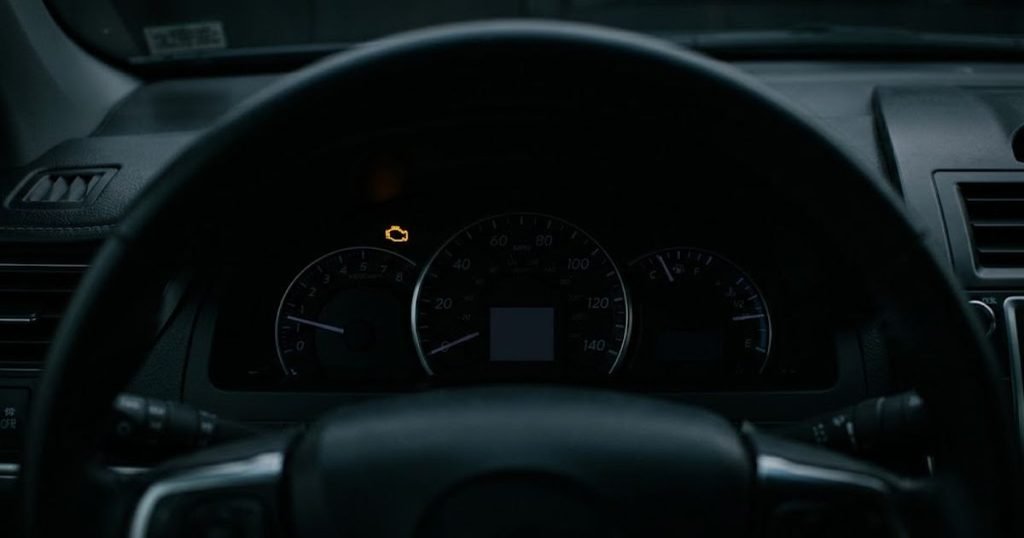
🚫 Stop and pull over if:
- The check engine light is flashing, not steady
- You smell fuel or hear popping/backfiring
- Power loss makes merging or maintaining speed feel unsafe
✅ OK to drive cautiously to a shop if:
- The stutter is mild and occasional
- The check engine light is steady or off
- Nothing smells off and braking feels normal
Important: a flashing check engine light during a misfire means unburned fuel is hitting your catalytic converter. That can destroy a $1,500 part in minutes. Don’t wait it out.
Causes and Repair Costs at a Glance
| Cause | Shows Up Most | Avg. Repair Cost | Safe to Drive Briefly? |
|---|---|---|---|
| Spark plugs / ignition coil | Idle & highway load | $480 | Yes, if light is steady |
| Mass airflow sensor | Acceleration | $346 | Yes |
| Fuel injector or filter | Acceleration | $250-$450 | Yes, unless power loss is severe |
| Vacuum leak | Idle | $150-$300 | Yes |
| Carbon buildup on intake valves | Idle & acceleration, 30k+ miles | $400-$900 | Yes, worsens over time |
| Catalytic converter | Highway load | $1,511 | Only if power loss is mild |
According to CarMD’s 2026 Vehicle Health Index, based on 39 million U.S. repair records from 2025, ignition coil and spark plug issues averaged $480 to fix and remain a top cause of misfires. A neglected oxygen sensor riding along with a stutter can quietly cut fuel economy by up to 40%.
The Cause Most Guides Skip: Carbon Buildup
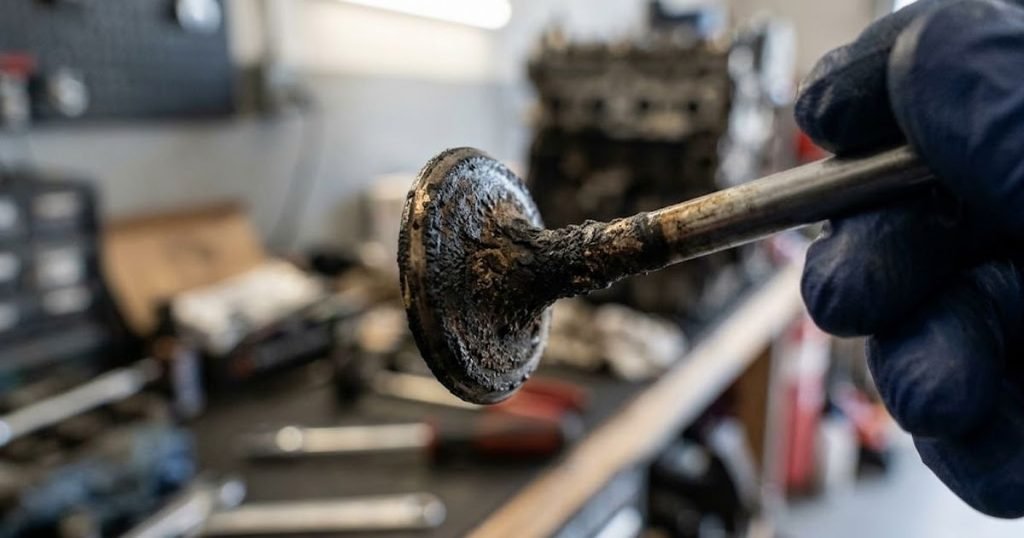
Direct-injection engines, common on 2020s vehicles, don’t spray fuel over the back of the intake valves the way older port-injected engines did. That means nothing washes carbon off the valves, and deposits build up over time, usually becoming noticeable between 30,000 and 60,000 miles.
Once it builds up enough, it disrupts airflow into the cylinder and throws off the air-fuel mix, especially at idle and light acceleration. A fuel additive helps early on. Once it’s advanced, it usually needs professional cleaning.
How to Diagnose It Yourself
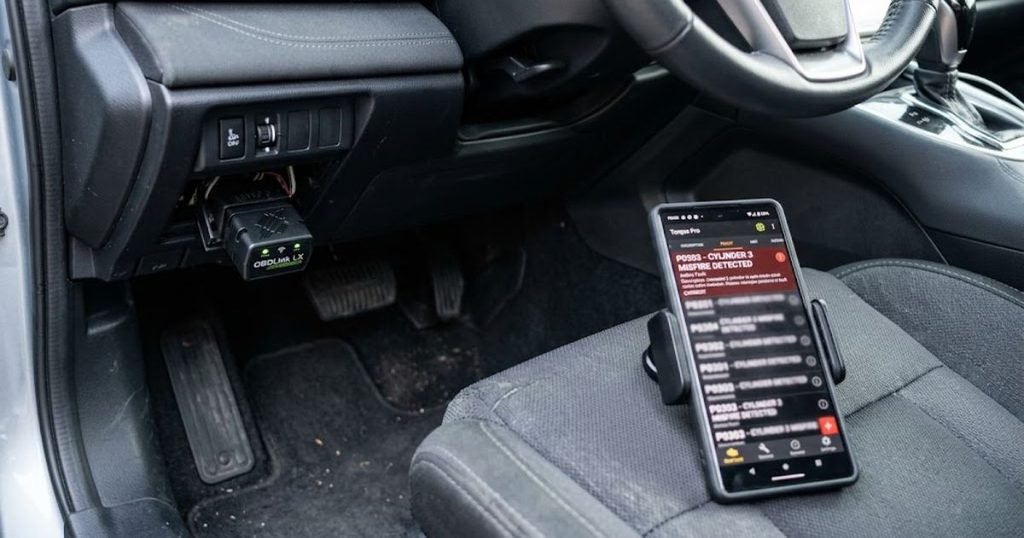
- Pull the codes. A misfire throws a P0300-series code. P0300 means random misfires; P0301 and up point to a specific cylinder. Look up any code in CarWarnings’ OBD code database. A basic scanner works, or use something like a BlueDriver, FIXD, or Innova scanner if you want cylinder-specific data.
- Check the spark plugs. Pull one and look at the tip. Black, wet, or worn electrodes point to ignition trouble.
- Listen for vacuum leaks. A hiss near the intake manifold, or a loose mass airflow sensor connector, causes more stumbling than people expect.
- Note when it happens. Idle, acceleration, or highway speed narrows the cause fast, using the breakdown above.
Frequently asked questions
Fuel problems usually worsen during acceleration because the engine needs more fuel under load. Spark problems, such as worn spark plugs or weak ignition coils, can show up at idle and may become worse under highway load or hard acceleration. An OBD2 scan can help narrow down the cause before replacing parts.
Stop driving if the check engine light is flashing, you smell fuel, hear popping or backfiring, or power loss makes the vehicle unsafe to drive. If the check engine light is steady and the stutter is mild and occasional, you may be able to drive cautiously to a repair shop.
Cold starts use a richer air-fuel mixture and can make borderline problems more noticeable. A vacuum leak, weak spark plug, ignition problem, or another issue that becomes less noticeable once the engine warms up can cause cold-only stuttering. If the problem disappears when warm, that pattern can help with diagnosis.
Not necessarily. Pull the diagnostic trouble codes first and inspect the spark plugs before replacing parts. A single-cylinder misfire can have several possible causes, including a spark plug, ignition coil, injector, or another cylinder-specific problem. Random or multiple-cylinder misfires can have different causes, so replacing all the spark plugs may not solve the underlying issue.
Yes. Contaminated or poor-quality fuel can cause hesitation, rough running, and stuttering that may resemble an ignition or fuel-system problem. If the symptoms started shortly after refueling, especially at a different fuel station, mention the timing when diagnosing the vehicle. Avoid assuming the fuel is the cause without checking for other possible problems.
Conclusion
A stuttering car is telling you air, fuel, or spark isn’t showing up on time. Idle points to air and vacuum. Acceleration points to fuel delivery. Highway speed points to spark or the transmission. Pull the codes before you guess, and don’t rule out carbon buildup if your car is a newer direct-injection engine with some miles on it. Most causes here are a $150-$500 fix when caught early. Ignored long enough, several of them turn into a $1,500 catalytic converter instead.
Look up what a specific code or light means for your make and model in CarWarnings’ brand directory or the full warning light index.