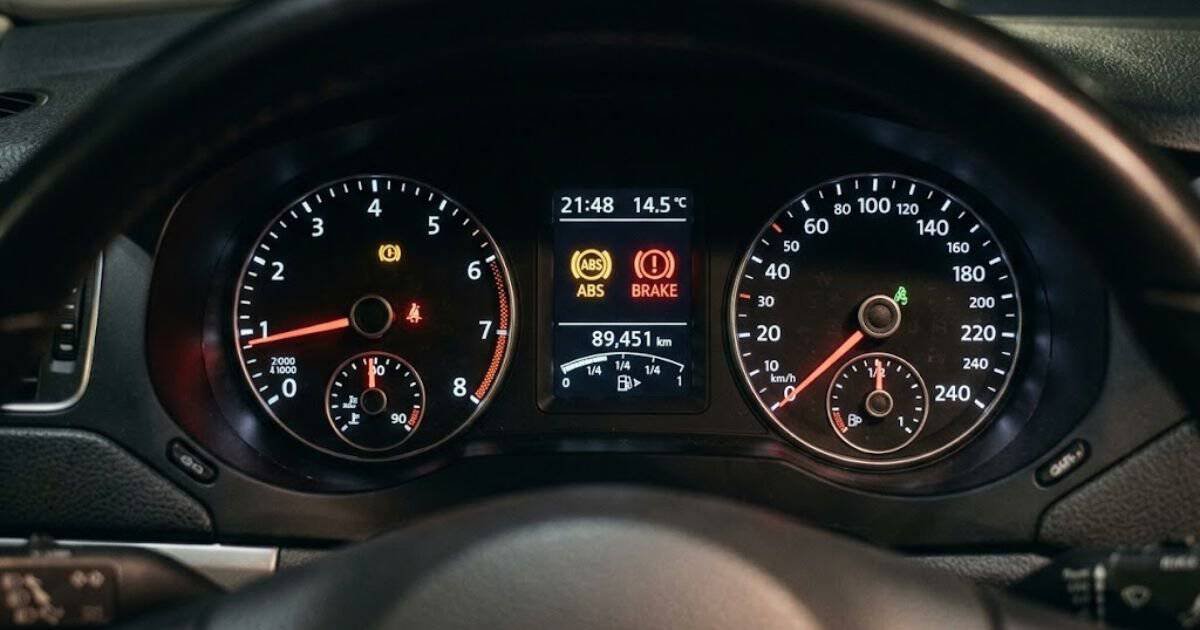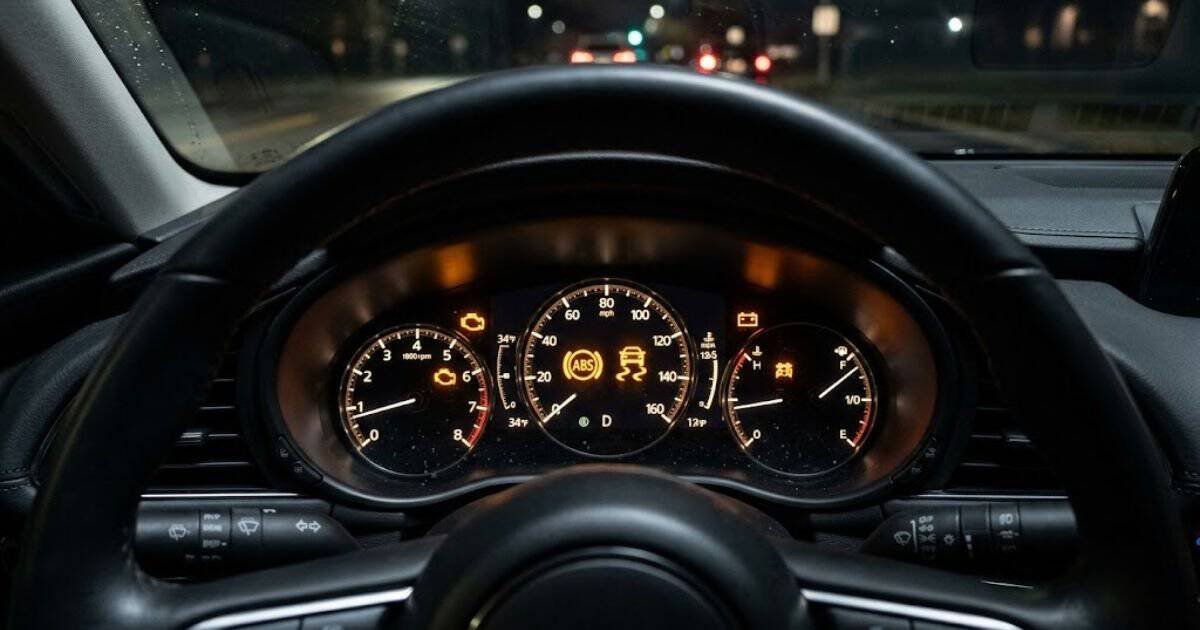
You start the car, and the dashboard doesn’t just show one warning, it shows four or five at once. Check engine. ABS. Traction control. Maybe the battery symbol too. Your first thought is probably some version of “how much is this about to cost me.”
Quick Answer
Multiple warning lights on at once usually do not mean you have four or five separate problems. In most cases, one shared issue, such as a weak battery, faulty sensor, or communication fault, is triggering several warning systems at the same time. Finding the shared root cause is the fastest way to diagnose the problem correctly.
- Check the warning colors: Red lights can require immediate attention, while amber or yellow lights usually mean the vehicle should be checked soon.
- Check the battery and charging system: A weak battery, low voltage, or failing alternator can trigger several warning lights at once.
- Scan the vehicle for codes: Check engine, ABS, traction control, and communication codes can help identify the shared problem instead of replacing parts blindly.
Safe to drive? If the warning lights are amber and the vehicle is driving normally, you can usually drive cautiously to get it checked. A red oil pressure, temperature, or brake warning means you should stop safely and investigate before driving further.
Multiple warning lights on at once describes several dashboard alerts activating together rather than one at a time. It usually points to a shared power source, sensor, or communication network, not several unrelated failures happening on the same day. Finding the system they share is the fastest route to a real fix.
Key takeaways:
- Red lights (oil, temperature, brakes) mean stop somewhere safe. Amber lights, on their own, usually mean drive carefully and get scanned soon.
- A weak battery or charging fault is the single most common cause of several warning lights on dashboard displays appearing together.
- Battery and ABS warning lights showing up together usually means low voltage, not a broken sensor or a brake problem.
- Pull the codes before you assume anything, including the “U” codes a basic scanner sometimes skips.
This guide covers passenger vehicles built after the mid-2000s, since that’s roughly when most manufacturers moved to a shared CAN bus network connecting the engine, ABS, transmission, and body control modules. It won’t help you with a single, isolated, flashing check engine light, that’s a more urgent and different situation covered in our check engine light guides.
Is It Safe to Keep Driving? Check the Colors First
Look, if you’re reading this from the driver’s seat right now with the engine idling, here’s the two-second version: check the colors before you do anything else, not the icons.
Red lights mean stop somewhere safe and shut the engine off. These are the ones that can turn into serious, expensive damage in minutes, not months:
- Oil pressure (a red oil can icon): the engine is running without enough lubrication. Keep driving and you risk destroying it.
- Temperature (a red thermometer): the engine is overheating. Continuing can warp the cylinder head or blow the gasket.
- Brake system (a red circle with “BRAKE” or an exclamation point): could mean low fluid or an actual fault in the braking system. Check that the parking brake isn’t simply engaged first, that’s a common false alarm, but if it isn’t, don’t drive far.
- Battery/charging (a red battery symbol): not always an instant emergency on its own, but it means your electrical reserve is now limited. Combined with a second or third light, treat it seriously.
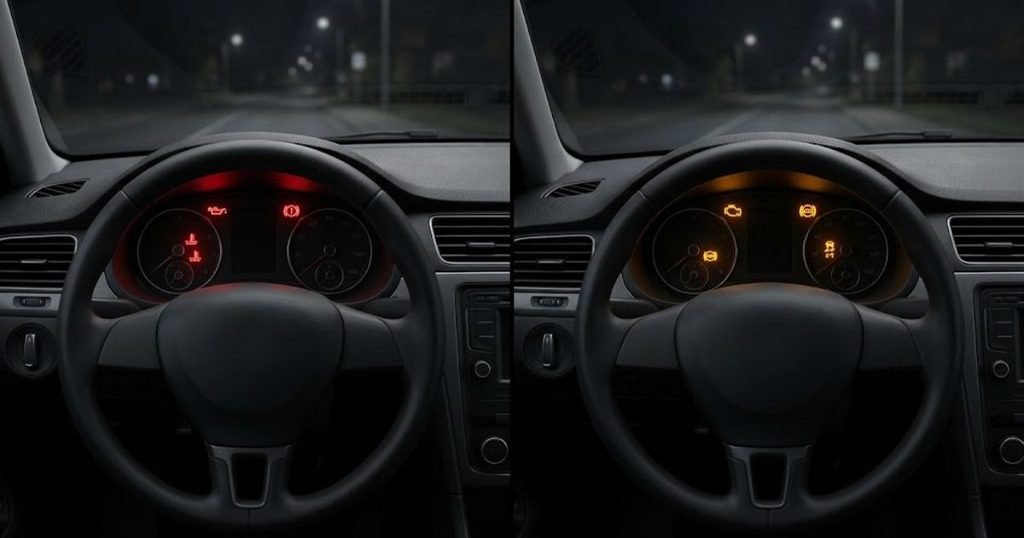
Amber or yellow lights, on their own, usually mean drive carefully and get it looked at soon. Check engine, ABS, traction control, and TPMS lights fall into this category when they aren’t flashing and nothing feels different about how the car drives.
To work out whether it’s safe to keep driving with multiple warning lights on at once, run through this sequence:
- Check whether any light is red, not amber.
- Notice if the car feels, sounds, or smells different than normal.
- If nothing is red and the car drives normally, continue cautiously to get it scanned.
- If anything is red, or braking or steering feels off, stop and call for help instead.
You’ll see some advice online say a battery light on its own is fine to drive on for a day or two. That’s true, if it really is just the battery light, nothing else, and the engine runs normally. Add a second or third light to that combination, though, and the math changes, because you no longer know how much reserve power you actually have left.
For a full breakdown of what each individual color and symbol means on your specific dashboard, CarWarnings’ warning light index covers red, yellow, and amber lights by brand and model.
Why Do Multiple Warning Lights Come On At Once?
Most people assume more lights means more problems. What actually tends to be true is closer to the opposite: several warning lights come on at once because they share one underlying cause, not because several unrelated things broke on the same day.
Modern cars share electrical and computer infrastructure across systems that seem unrelated from the driver’s seat. The ABS module, the traction control system, and the engine computer often draw from the same voltage supply and talk to each other over the same communication network. When that shared resource, whether it’s battery voltage, a sensor signal, or network connectivity, gets disrupted, every system depending on it can throw a warning at the same moment.
According to AAA, a lit battery warning light usually points to a problem with the charging system (the battery, the alternator, or the connections between them), and in some cases that same charging problem can trigger the check engine light too. That’s a clean example of one root cause, weak charging, producing what looks like two separate complaints on the dash.
Here’s the thing: this is also why restarting the car sometimes “fixes” several warning lights on dashboard displays, at least for a while. If the shared cause was a brief voltage dip or a sensor hiccup, the modules can reset clean. If the lights come back, the underlying cause is still there. It just isn’t a coincidence anymore.
Common Warning Light Combinations (Quick Comparison)
Certain combinations of multiple dashboard warning lights show up often enough that you can usually guess the likely cause before you even plug in a scanner. This isn’t a substitute for actually pulling codes, but it tells you where to look first.
| Combination | Likely Shared Cause | Safe to Keep Driving? | Check This First |
|---|---|---|---|
| Battery + ABS (+ traction control) | Low voltage reaching the ABS/stability modules | Short distance only, avoid highway trips | Battery voltage, engine off and running |
| Check engine + ABS + traction control | Faulty wheel speed sensor at one corner | Yes, drive cautiously to get scanned | Wheel speed sensor codes, per-wheel wiring |
| Battery + power steering + check engine | Failing alternator or a slipping serpentine belt | Limited, nearest safe stop only | Belt condition, alternator output voltage |
| Oil + temperature (+ check engine) | Low oil, coolant loss, or a developing engine fault | No, stop immediately | Oil level and coolant level once safely stopped |
| TPMS + oil-life reminder + random misfire code | Coincidence, genuinely separate issues | Yes | Each item individually, don’t assume one cause |
The battery and ABS warning lights combination deserves its own mention, because it’s one of the most common calls a shop gets and one of the cheapest to diagnose yourself. ABS and traction control modules are sensitive to low voltage. Drop below roughly 11.5 volts and they’ll often disable themselves and light up rather than operate on bad data, even though nothing is mechanically wrong with the sensors or the brakes.
Battery and ABS lights on together usually mean voltage, not brakes: test the battery before you assume you need new wheel speed sensors. A $40 battery test can rule out a $600 sensor job.
What to Check First: A Step-By-Step Sequence
Once you’ve confirmed nothing red is lit and the car drives normally, work through this in order. It’s roughly what a shop would do anyway, minus the labor bill.
1. Test the Battery and Charging System
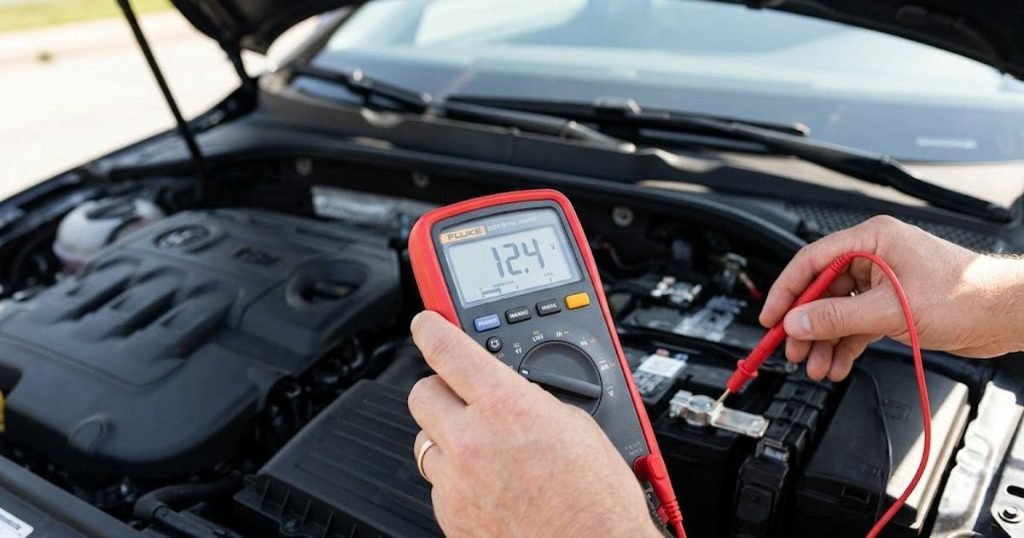
This is the highest-value five minutes you’ll spend. Grab a cheap multimeter, or ask an auto parts store to test it for free.
- Engine off: a healthy battery reads about 12.4 to 12.7 volts. Below 12.2 volts at rest, it’s weak.
- Engine running: you want to see roughly 13.8 to 14.4 volts. If the reading isn’t climbing above the resting number, the alternator isn’t charging properly.
While you’re there, check the terminals. Corrosion (a white or greenish crust) or a loose clamp can mimic a dying battery and costs nothing to fix.
2. Look at Wheel Speed Sensors If ABS or Traction Control Is Involved
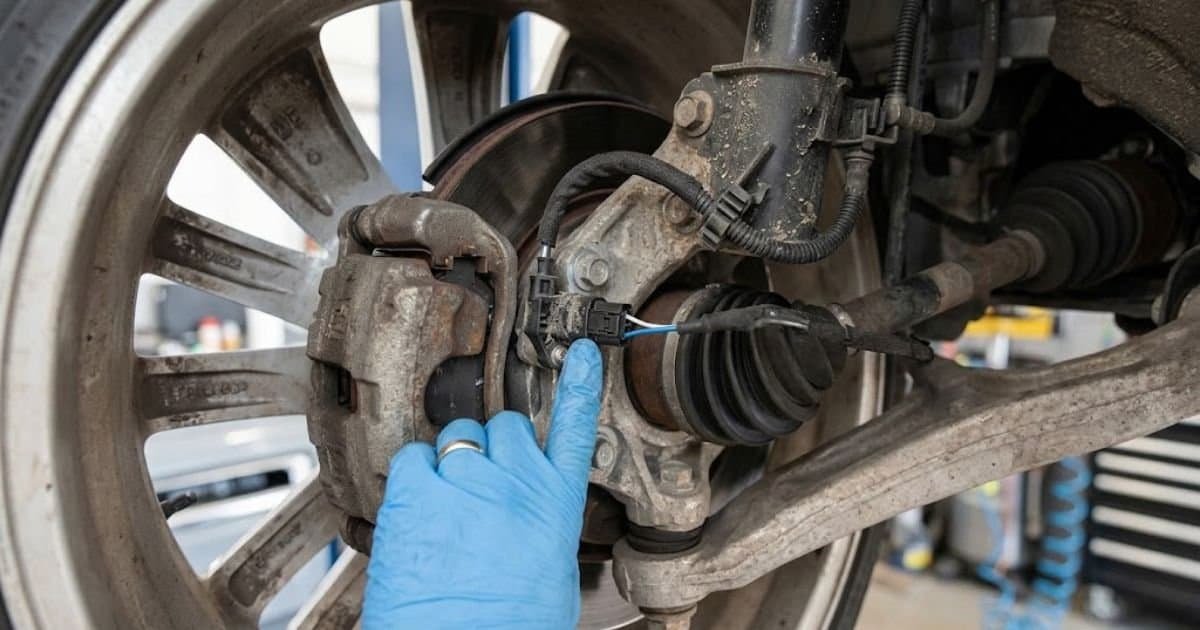
If the battery and charging system check out fine and ABS, traction control, or stability control are part of the combination, a wheel speed sensor is next on the list. These sensors sit close to each wheel, so they take a beating from road debris and corrosion, and less often from a damaged reluctor ring on the hub. A single failing sensor at one corner is enough to knock out ABS, traction control, and stability control together, since all three depend on the same wheel-speed data.
3. Pull the Codes, Including U-Codes
A basic code reader usually only shows generic engine codes. What most guides skip is that you need to specifically check for network or communication codes, the ones starting with “U” (like U0100 or U0073), because those point to a module that’s lost contact with the rest of the car’s network rather than a part that’s physically broken.
If several U-codes show up alongside your other faults, don’t chase each one individually. Start by checking chassis grounds. A corroded or loose ground strap is a surprisingly common cause of exactly this kind of network-wide confusion, and it’s a lot cheaper to fix than it sounds. You can look up what any specific code you find actually means in CarWarnings’ OBD code database.
Tools That Make This Easier
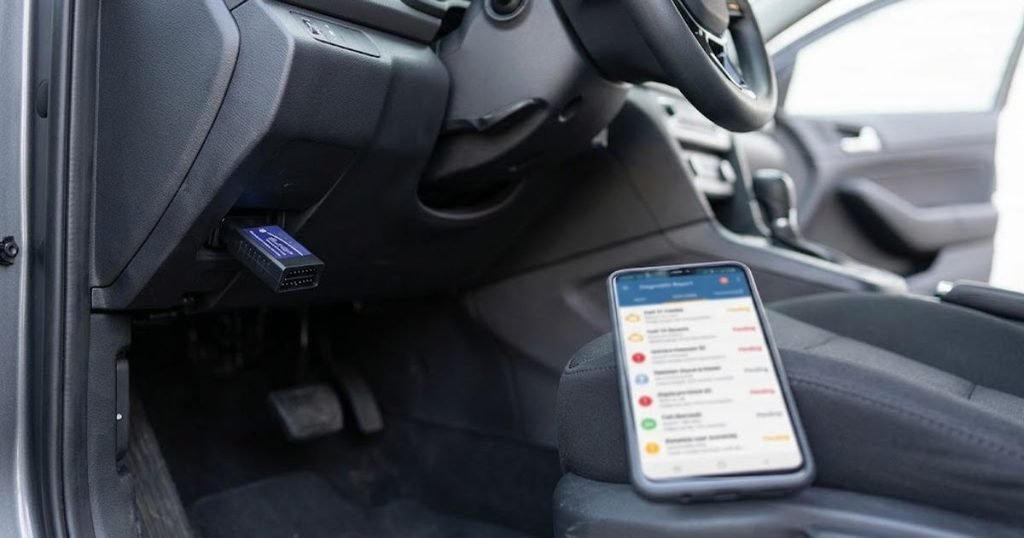
You don’t need a shop-grade scan tool to work through the checklist above, but the free basic OBD-II readers at auto parts stores usually only show generic engine codes, not the ABS or network codes you actually need for a multi-light dashboard.
| Tool | Best For | Reads Beyond Engine Codes? | Rough Price |
|---|---|---|---|
| BlueDriver OBD2 Scanner | DIYers who want ABS, SRS, and transmission codes plus a repair report | Yes, on most supported vehicles | Around $100, no subscription |
| FIXD Sensor | Casual drivers who just want the check engine light decoded in plain English | Basic engine codes free; deeper access needs Premium | Around $20-60 sensor, optional $99/year |
| Innova OBD2 Scanner (5610) | Owners who want a handheld with a screen instead of relying on a phone | Yes, plus live data and hybrid/EV battery checks | Around $300 |
If you’re only ever going to decode one check engine light a year, FIXD or a free parts-store scan covers it. If ABS, traction control, or a multi-light dashboard is a recurring headache, BlueDriver or the Innova tend to pay for themselves the first time they save you a diagnostic fee.
When Multiple Lights Really Are Separate Problems
Shared causes explain most cases, not all of them. If your codes come back genuinely unrelated, say a slow tire pressure leak, an oil-life reminder, and a random misfire code, and your battery voltage and grounds check out fine, you’re probably looking at ordinary wear catching up with the car all at once rather than one dramatic failure.
This shows up more often on higher-mileage vehicles or ones that have missed a service interval or two. The fix here isn’t one dramatic repair, it’s working through each fault on its own, prioritizing anything that affects braking, steering, or engine safety first, and letting tire-pressure or maintenance-reminder items wait their turn.
Frequently Asked Questions
Check whether the affected systems share power or sensor data. Battery, ABS, and traction control lighting up together usually share one cause. A tire pressure light next to an unrelated maintenance reminder usually doesn’t.
Test the battery voltage first. If it reads below about 12.2 volts, treat it as a short-distance-only situation and get the charging system tested rather than driving far.
It can clear the lights temporarily, but it doesn’t fix whatever caused them, and on some cars it resets settings you’d rather keep. Pull the codes first so you don’t lose the evidence of what actually happened.
A brief flash of every light at startup is normal because the dashboard is performing a bulb check. If they stay on after the engine is running, that can point to an actual battery, alternator, or network issue rather than a normal self-test.
Stop driving if a red oil pressure, temperature, or brake warning is part of the combination, or if the car is behaving differently, such as rough running, weak brakes, or heavy steering. Amber-only combinations are generally safe to drive to a shop cautiously.
What to Do Next
Multiple warning lights on at once feel like a disaster, but they’re usually one problem wearing several hats. Check the colors first: red means stop, amber means proceed carefully. Test the battery, since that single check rules out or confirms the most common shared cause in minutes. Then pull the codes, including the U-codes most basic readers skip, before you assume you’re looking at several expensive repairs instead of one.
If you want to look up exactly what a specific light or code means for your make and model, search CarWarnings by brand or browse the full warning light index to see what a real multi-light dashboard looks like on a car like yours.