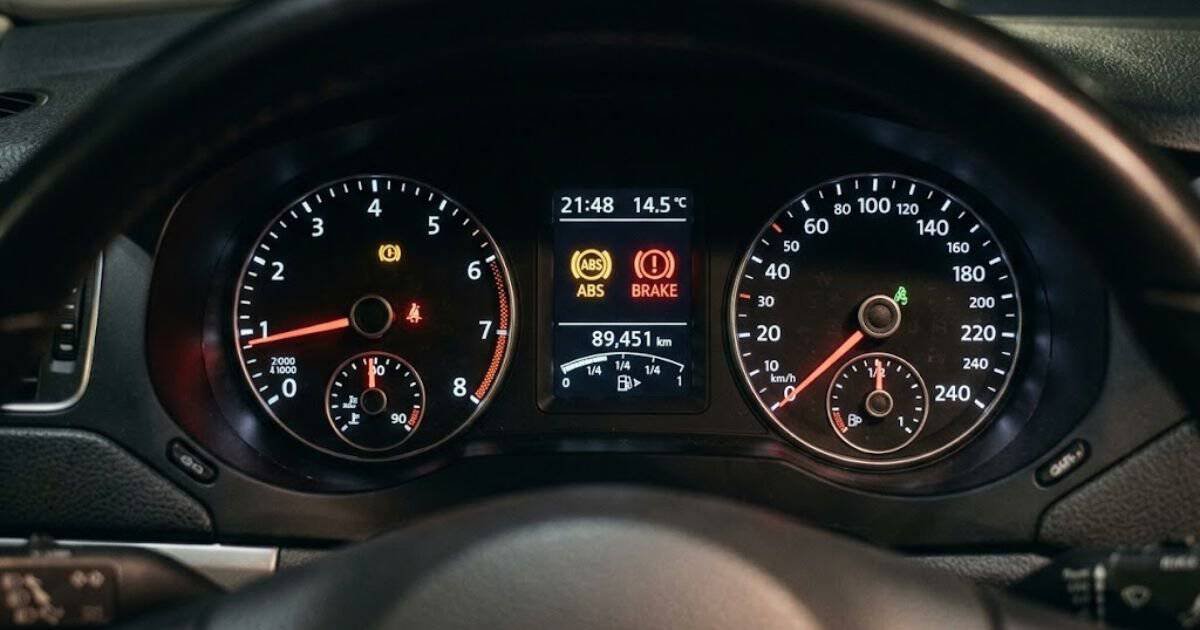
Seeing a check engine light on after oil change service can be stressful, especially when the warning appears just after leaving the shop. You may wonder whether the oil change caused engine damage. Usually, it doesn’t. However, an incorrect oil level, oil leak, disturbed sensor, loose intake connection, or unrelated fault can trigger the warning around the same time.
What Should You Do Right Now?
Quick answer
If the check engine light is on after an oil change and the light is steady while the vehicle runs normally, check the engine oil level and look for fresh leaks around the oil filter and drain plug. Then arrange an OBD-II scan. If the light is flashing, the engine is shaking, power has dropped, the vehicle is overheating, or the oil-pressure warning is on, stop driving when safe and get the problem checked immediately.
Don’t reset the warning before finding the cause. The stored diagnostic code can provide an important clue.
Why Is My Check Engine Light On After an Oil Change?
A check engine light on after oil change doesn’t automatically mean the engine has been damaged. A normal oil change shouldn’t directly activate the malfunction indicator light. However, problems involving the oil level, filter, drain plug, wiring, intake system, or emissions system can appear immediately after service.
Timing matters, but it doesn’t prove the oil change caused the warning. An oxygen sensor, ignition component, EVAP fault, or another problem can happen on the same day. An OBD-II scan is much more useful than guessing.
Is It Safe to Drive With a Check Engine Light?
Whether you can drive depends on the warning and how the vehicle behaves. A steady light with normal engine performance usually isn’t an immediate emergency. Still, you should arrange diagnosis soon because some engine or emissions faults produce few noticeable symptoms.
A flashing light is more concerning. If the engine shakes, loses power, overheats, smokes, smells strongly of fuel, or makes unusual noises, stop driving when safe. A severe misfire can send unburned fuel into the exhaust and damage the catalytic converter.
| Dashboard warning | Possible meaning | Recommended action |
|---|---|---|
| Steady check engine light | Engine or emissions fault | Check basics and arrange diagnosis |
| Flashing check engine light | Serious misfire or fault | Stop driving when safe |
| Check engine light + shaking | Possible severe misfire | Avoid unnecessary driving |
| Check engine light + oil leak | Possible service-related issue | Check oil level and inspect the leak |
| Oil-pressure warning | Possible lubrication problem | Shut the engine off safely |
What Should You Check After an Oil Change?
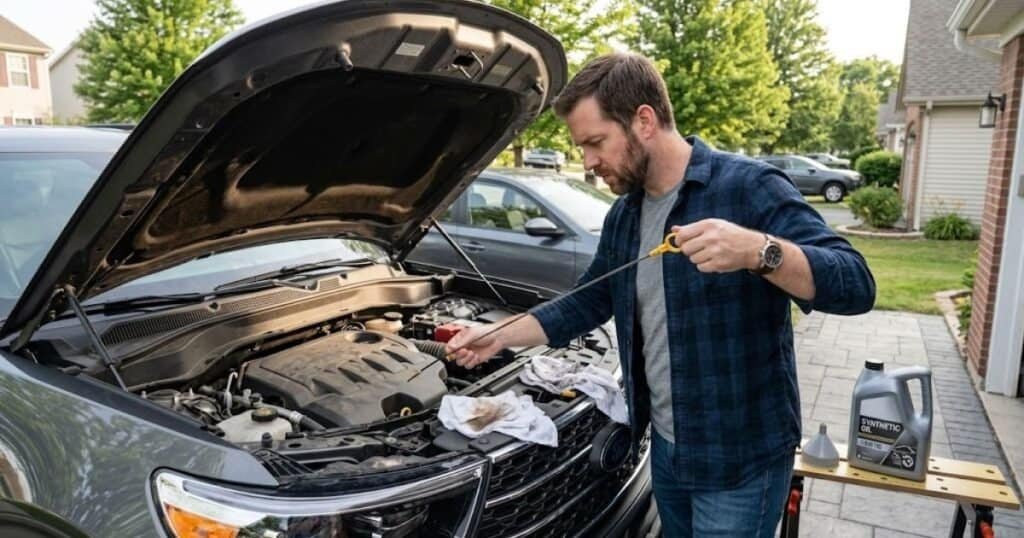
Start with the easiest checks. First, determine whether the light is steady or flashing. Then check the engine oil level according to the procedure in your owner’s manual.
Next, look underneath the vehicle for fresh oil. Pay close attention to the oil filter and drain plug. If you see a new leak, don’t ignore it. Continued oil loss can become a serious engine problem.
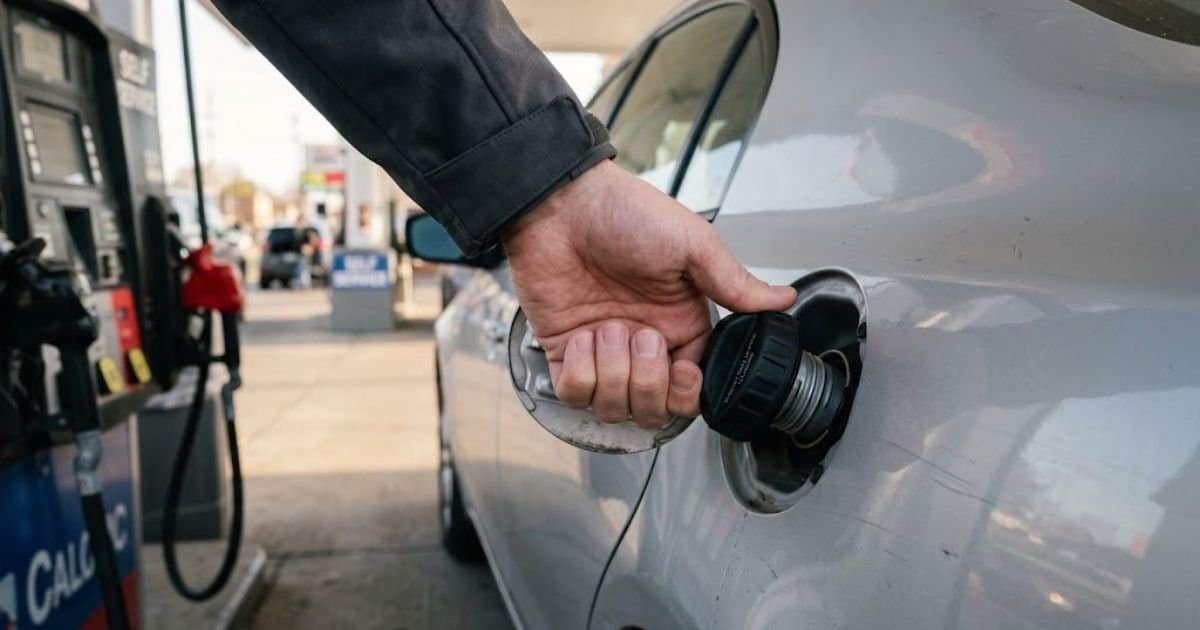
Check that the oil filler cap and dipstick are properly installed. You can also inspect visible wiring and intake components without touching hot or moving parts. Finally, make sure the fuel cap is secure because an EVAP leak can trigger the warning.
| Check | What to look for | Why it matters |
|---|---|---|
| Dashboard | Steady or flashing light | Determines urgency |
| Oil level | Too low or too high | Can indicate an oil-related problem |
| Ground | Fresh oil | May reveal a leak |
| Oil filter | Oil around the seal | Could indicate installation trouble |
| Drain plug | Fresh oil around plug | May indicate leakage |
| Oil cap | Securely installed | Helps maintain crankcase operation |
| Fuel cap | Properly tightened | Can affect EVAP monitoring |
| Engine | Shaking or power loss | May indicate a serious fault |
Don’t add oil simply because the warning appeared. Check the actual level first. Too much oil can cause problems too.
Can an Oil Change Cause a Check Engine Light?
A properly performed oil change doesn’t normally cause the warning. Fresh engine oil itself doesn’t command the vehicle computer to turn on the malfunction indicator.
However, something connected with the service can create a fault. An incorrect oil level, leaking filter, loose drain plug, disturbed sensor, or intake connection can contribute to problems on some vehicles.
There’s also another possibility: the warning may have nothing to do with the oil change. The vehicle’s diagnostic system monitors many components continuously. A fault can appear minutes or hours after maintenance simply because that is when the system detected it.
Therefore, treat the timing as a useful clue rather than definite proof.
Common Causes of a Check Engine Light After an Oil Change
Incorrect Engine Oil Level
Engine oil should remain within the range specified by the manufacturer. Too little oil reduces available lubrication. Severe oil loss can eventually cause major engine damage.
Too much oil isn’t harmless either. Excess oil can become aerated as moving components disturb it. Depending on the engine design, excessive oil can also affect crankcase pressure or enter areas where it shouldn’t.
If the level is substantially below or above the recommended range, correct the problem before normal driving.
Wrong Oil Viscosity or Specification
Modern engines often require a specific oil viscosity and performance specification. The correct oil helps maintain suitable lubrication during cold starts and normal operation.
This becomes particularly important with engines that use variable valve timing. These systems can depend on controlled oil flow and pressure. Using the wrong oil doesn’t automatically trigger a warning on every vehicle, but it can contribute to problems in some engines.
Check your owner’s manual rather than relying on a generic oil recommendation.
Loose or Leaking Oil Filter
The oil filter must seal correctly. If the gasket isn’t seated properly, fresh oil can escape around the filter.
A leak can gradually reduce the oil level. If you notice fresh oil around the filter shortly after service, have the installation inspected.
Loose Drain Plug
The drain plug is another important inspection point. A loose plug or damaged sealing washer can allow fresh oil to escape.
Even a small leak deserves attention. What begins as a minor drip can eventually lower the oil level significantly.
Loose or Disturbed Sensors
Depending on the vehicle, technicians may work near electrical connectors, sensors, air-intake components, and hoses.
A loose mass airflow sensor connector or disturbed intake hose can affect engine operation. The computer may then detect readings outside the expected range.
This doesn’t mean a disconnected sensor is the likely cause every time. It simply makes visible connections worth checking when the warning appeared immediately after service.
Loose Fuel Cap or EVAP Problem
The EVAP system controls fuel vapors and checks the fuel system for leaks. A loose fuel cap can therefore trigger the check engine light.
This may be completely unrelated to the oil change. You could have refueled shortly before the service and only notice the warning afterward.
That’s another reason not to assume that the last service automatically caused the problem.
How Do You Diagnose a Check Engine Light After an Oil Change?
An OBD-II scanner can retrieve diagnostic trouble codes stored by the vehicle computer. These codes narrow the search and provide a useful starting point for diagnosis.
For example, P0300 generally relates to random or multiple-cylinder misfire detection. P0171 can indicate a lean condition. P0420 commonly relates to catalyst efficiency. P0455 can indicate a large EVAP leak.
However, a trouble code doesn’t necessarily identify the failed part. A lean-condition code, for example, could result from an intake leak, fuel problem, sensor issue, or another condition.
Think of the code as a clue rather than a verdict. A proper diagnosis may require live-data analysis, wiring checks, vacuum testing, fuel testing, or mechanical inspection.
Should You Reset the Check Engine Light?
It’s better to diagnose the warning before clearing it. Resetting the light doesn’t repair the underlying fault. If the problem remains, the warning can return.
Clearing the code can also remove useful diagnostic information, including stored fault details and freeze-frame data. Those details can help a technician understand what was happening when the warning appeared.
Resetting the system can also affect emissions readiness monitors. A recently reset vehicle may need specific driving conditions before those monitors complete their checks.
The better sequence is simple:
Scan → diagnose → repair → verify → clear the code when appropriate.
How to Reset Check Engine Light After Oil Change
An oil change itself doesn’t normally require resetting the check engine light. The check engine warning and maintenance reminder are separate systems on many vehicles.
If a real fault caused the warning, fix the fault first. Afterward, a compatible diagnostic scanner can clear the code when appropriate. In some situations, the vehicle can eventually turn the light off itself after confirming that the fault has disappeared.
Avoid blindly disconnecting the battery. Depending on the vehicle, that can erase diagnostic information, reset settings, and affect emissions readiness.
If you’re trying to reset an oil-change reminder rather than a check engine light, use the vehicle manufacturer’s specific maintenance-reset procedure.
How to Turn Off Check Engine Light After Oil Change
The safest way to turn off the warning is to fix whatever caused it. If a loose fuel cap caused the fault, securing it may allow the vehicle to confirm the repair after completing its monitoring cycle.
If a sensor, wiring problem, misfire, or mechanical fault caused the warning, that issue needs proper diagnosis and repair.
Simply clearing the code can make the dashboard look normal temporarily while leaving the actual problem untouched. If the warning returns, don’t keep resetting it. Find out why the vehicle computer detected the fault.
Why Is My Check Engine Light Still On After an Oil Change?
An oil change doesn’t normally clear diagnostic trouble codes. If the warning remains afterward, the original fault may still exist.
Sometimes the vehicle also needs to complete specific OBD readiness checks before it can confirm that a problem has disappeared. This can take some normal driving.
If the light stays on, retrieve the diagnostic code rather than repeatedly disconnecting the battery or clearing the system.
Check Engine Light After Oil Change but Car Runs Fine
A vehicle can run normally while the check engine light remains illuminated. Many emissions-related problems don’t immediately affect acceleration, idle quality, or fuel economy.
That doesn’t mean the warning can be ignored forever. The computer may have detected a condition before noticeable symptoms develop.
A steady warning with normal operation is generally less urgent than a flashing warning accompanied by rough running. Even so, arrange a diagnostic scan rather than waiting indefinitely.
Check Engine Light After Oil Change and Car Is Shaking
If the engine starts shaking while the check engine light is flashing, take the situation seriously. A severe misfire can cause rough running and send excessive unburned fuel into the exhaust.
Possible causes include spark plugs, ignition coils, fuel delivery, air measurement, wiring, or mechanical problems. The oil change may or may not be connected.
Don’t assume fresh oil will solve a shaking engine. Stop driving when safe and arrange proper diagnosis.
What If the Oil-Pressure Light Is Also On?
The oil-pressure warning deserves separate attention. The check engine light monitors many engine and emissions conditions, while the oil-pressure warning can indicate a lubrication-pressure problem.
If an oil-pressure warning appears after service, safely shut the engine off. Check the oil level according to the manufacturer’s instructions and investigate before continuing to drive.
A correct oil level doesn’t guarantee correct oil pressure. A pump problem, internal fault, leak, or other mechanical issue can still exist.
How Much Does Check Engine Light Diagnosis Cost?
There isn’t one standard diagnostic price throughout the United States. Some automotive businesses offer basic code scans for little or no charge. Professional diagnosis can cost more when technicians need live-data analysis, electrical testing, smoke testing, or mechanical inspection.
The eventual repair cost depends on the actual cause. A loose fuel cap may cost nothing to correct. A sensor, wiring repair, ignition component, catalytic converter, or major engine fault can cost considerably more.
Accurate diagnosis can save money because replacing parts based only on a code can lead to unnecessary expenses.
What Should You Do If the Warning Appeared Right After Service?
If your check engine light on after oil change appeared immediately after service, contact the service provider and explain the timing. Tell them whether the light is steady or flashing and whether the vehicle has any unusual symptoms.
Ask them to verify the oil level, oil specification, filter installation, drain plug, and visible components around the service area. If you’ve already scanned the vehicle, provide the diagnostic code.
Keep your service receipt and note the vehicle mileage. Good documentation makes it easier to determine what happened and when.
The goal isn’t to accuse the shop automatically. The goal is to establish whether the service caused or contributed to the problem.
Frequently asked questions
The cause could be an incorrect oil level, oil leak, loose connector, intake problem, EVAP fault, sensor issue, or unrelated engine fault. The timing doesn’t prove that the oil change caused it.
If the light is steady and the vehicle runs normally, careful driving to a repair facility may be reasonable. If the light flashes or the engine runs badly, stop driving when safe and arrange assistance.
An oil filter doesn’t normally activate the warning directly. However, an incorrectly installed filter can leak. Significant oil loss can then contribute to other engine problems.
It’s better to diagnose the fault first. Disconnecting the battery can erase useful diagnostic information and reset emissions readiness monitors.
It depends on the vehicle and the fault. After a successful repair, the system may turn the warning off after confirming that the problem has disappeared. Some monitors require specific driving conditions.
Final Takeaway
A check engine light on after oil change doesn’t automatically mean your engine has been damaged. The warning may come from an oil-level problem, leak, disturbed component, emissions fault, or an unrelated issue that happened at the same time.
Start with the basics. Determine whether the light is steady or flashing. Check the oil level. Look for fresh leaks around the filter and drain plug. Check the oil filler cap and fuel cap. Then retrieve the diagnostic code if the cause isn’t obvious.
Most importantly, don’t ignore serious symptoms. A flashing warning, severe shaking, major power loss, overheating, smoke, unusual engine noise, or oil-pressure warning requires prompt attention.
Don’t panic. Don’t guess. Diagnose the cause before clearing the warning. That approach can protect the engine, reduce unnecessary repair costs, and give you a much clearer answer about what happened after the oil change.
For US-specific information about vehicle emissions and OBD systems, consult the U.S. Environmental Protection Agency. For oil specifications, warning-light meanings, and model-specific procedures, follow the vehicle manufacturer’s owner’s manual.