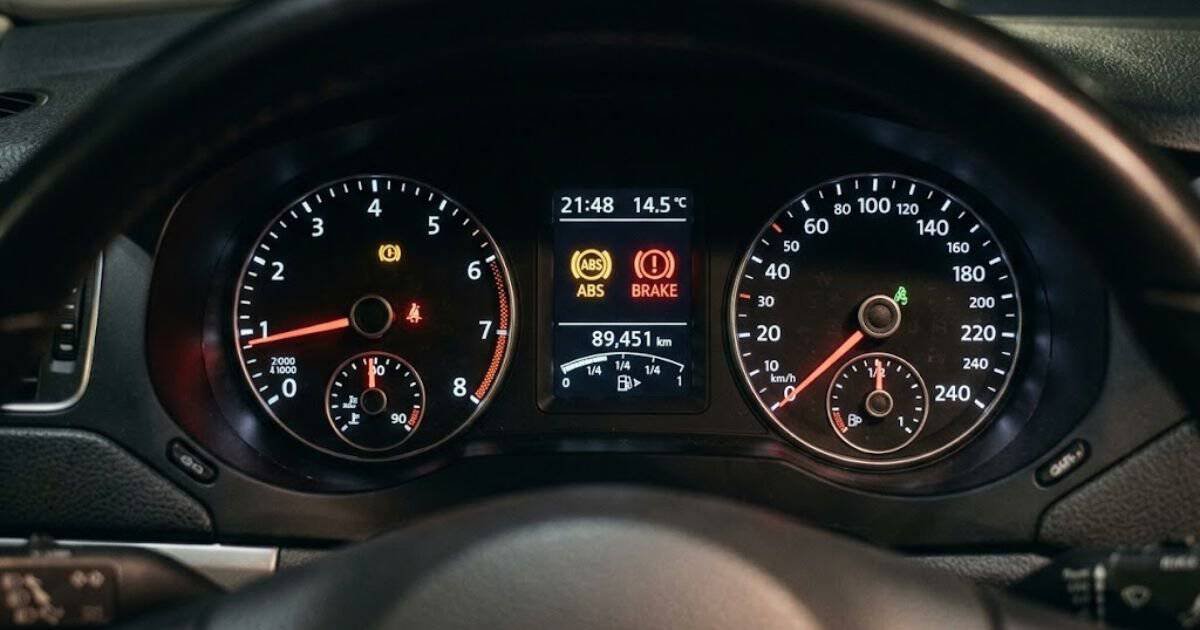
A light just came on. Maybe it’s yellow. Maybe it’s red and you’re not sure if you should pull over right now or just make a mental note to call the dealer tomorrow.
Volkswagen Jetta warning lights are grouped by color for a reason: green means informational, yellow or orange means service is needed soon, and red means stop the car safely as soon as you can. This guide breaks down what each light means, whether it’s safe to keep driving, and roughly what the fix might cost.
This article is for Jetta owners trying to identify a specific light they’re seeing right now, not for people diagnosing a full check engine code from scratch. It covers MK6 (2011 to 2018) and MK7 (2019 and newer) generations, since a few icons and systems changed between them.
Quick answer
If the light is red, treat it as urgent. Find a safe spot, stop the engine, and don’t keep driving until you know what’s wrong. If it’s yellow or orange, you can usually finish your trip, but get it looked at within a few days.
- Yellow/orange lights mean “service soon,” not “pull over now”
- Red lights mean stop the car in a safe place and shut off the engine
- The EPC, ESP, and ABS lights are the three that confuse Jetta owners most
- A cheap OBD-II scanner will read the actual trouble code behind most lights in under a minute
- MK6 and MK7 Jettas use slightly different icon sets for a handful of systems
How the Color System Works
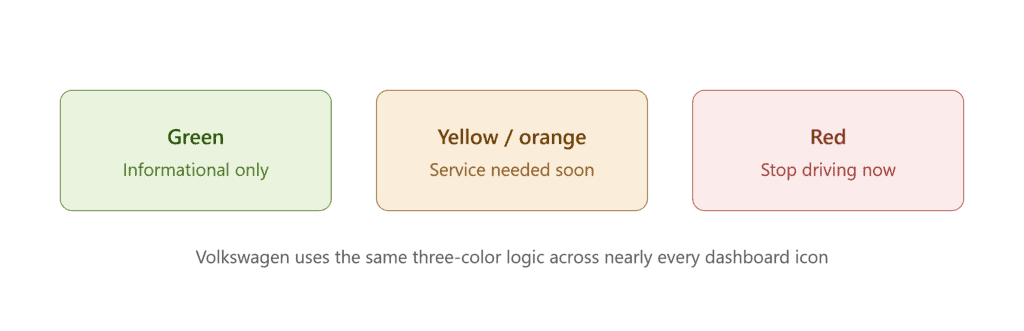
Volkswagen’s dashboard warning system uses three colors to communicate urgency: green lights are informational only, yellow or orange lights indicate a problem that needs service soon, and red lights signal a serious issue requiring you to stop driving immediately. This traffic-light logic is intentional and consistent across nearly every VW model.
Most drivers already know this instinctively, even if nobody ever told them outright. Green means “this is fine, just so you know.” Yellow means “pay attention, don’t ignore this.” Red means “stop.”
According to Volkswagen’s official owner documentation, the system is designed so a driver can gauge severity by color alone before even reading the icon shape. That’s useful, because Jetta warning symbols aren’t always self-explanatory at a glance, especially the exclamation-point family of icons that cover everything from low washer fluid to a failing brake system.
Here’s the thing: not every yellow light is equally serious, and not every red light means catastrophic damage. A red seatbelt reminder is annoying, not dangerous. A red oil pressure light, on the other hand, can mean engine damage within seconds if you keep driving. Color tells you the category. It doesn’t tell you the whole story.
Yellow and Orange Warning Lights
Yellow and orange lights mean something needs attention, but you generally have time. You’re not going to strand yourself by finishing a short errand. Just don’t let it sit for weeks.
ABS Light
Indicates a fault in the anti-lock braking system. Regular brakes still work, but ABS assistance may be disabled. Common OBD-II codes: C0035, C0040 (wheel speed sensor faults). Typical diagnosis and repair: $150 to $600, depending on whether it’s a sensor or the ABS module itself.
Can I still drive it? Yes, for now, but get it checked within a few days. Braking distance may increase on wet or icy roads.
ESP/ASR Light (Electronic Stability Program)
Solid means the system is manually switched off. Flashing means it’s actively intervening or has detected a fault. Related code: C1234 or similar traction-control fault codes, model dependent.
Can I still drive it? Yes if it’s solid and you turned it off intentionally. If it’s flashing on its own and you didn’t touch anything, have it scanned soon.
EPC Light (Electronic Power Control)
This is the light that confuses more Jetta owners than almost any other. EPC covers the throttle body, accelerator pedal sensor, and related electronics. It often comes on with reduced power or a rough idle.
Can I still drive it? Usually yes at reduced power, but avoid highway driving until it’s diagnosed. Diagnosis typically runs $100 to $150; the fix ranges from a $30 sensor to a $400+ throttle body.
Check Engine Light
The broadest and least specific light on the dashboard. Could be a $20 gas cap issue or a $2,000 catalytic converter problem. This is exactly why a scan tool matters more here than for almost any other light.
Can I still drive it? Usually yes if it’s steady. If it starts flashing, stop driving. A flashing check engine light on a Jetta typically means an active misfire that can damage the catalytic converter within minutes.
TPMS (Tire Pressure Monitoring System)
Tire pressure is low in one or more tires. Federal Motor Vehicle Safety Standard No. 138 requires U.S. passenger vehicles to warn drivers when a tire is 25 percent or more below the manufacturer’s recommended cold inflation pressure.
Can I still drive it? Yes, but check your tires immediately with a gauge. Don’t rely on the light to tell you exactly which tire or by how much.
Airbag Light
The airbag system has detected a fault or has been manually deactivated (common if you have a rear-facing car seat in the front passenger seat). Diagnosis runs $80 to $150; sensor or clockspring replacement can run $200 to $600.
Can I still drive it? Yes, but your airbags may not deploy in a crash. Don’t delay on this one.
Battery/Charging Light
Points to a charging system issue, usually the alternator or battery connections. If this appears alongside dimming interior lights, you may only have 20 to 30 minutes of drive time left before the battery drains.
Can I still drive it? Short distances only, and head straight to a shop.
Brake Pad Wear Indicator
Pads are thin and need replacement soon. Typical cost: $150 to $300 per axle for pads alone.
Can I still drive it? Yes, but don’t push it past a few weeks. Worn-out pads damage rotors, which roughly doubles the repair bill.
Red Warning Lights
Red means stop. Not “stop when convenient.” Stop the car in a safe location, shut off the engine, and figure out next steps from there.
- Oil Pressure Light: No oil pressure detected. Continuing to drive can destroy the engine within a minute or two. Pull over immediately.
- Coolant Temperature Light: Engine is overheating. Stop, let it cool, and check coolant level once it’s safe to open the reservoir.
- Brake System Light: Could mean the parking brake is engaged, brake fluid is low, or there’s an ABS-related brake fault. Confirm the parking brake first before assuming the worst.
- DSG Transmission Temperature: The dual-clutch transmission is overheating. Shift to park and let it idle-cool before continuing.
- Electric Parking Brake: A fault in the electronic parking brake system. Don’t drive until you’ve confirmed the brake is fully released.
- Alternator Light: Charging has failed. The car is running on battery power alone and will eventually stall.
Most people assume any red light means the car is about to break down catastrophically. The data doesn’t back that up evenly across all red lights. A red seatbelt light is a compliance reminder, not a mechanical emergency. Oil pressure and coolant temperature are the two red lights where seconds actually matter.
Jetta-Specific Lights People Get Confused About
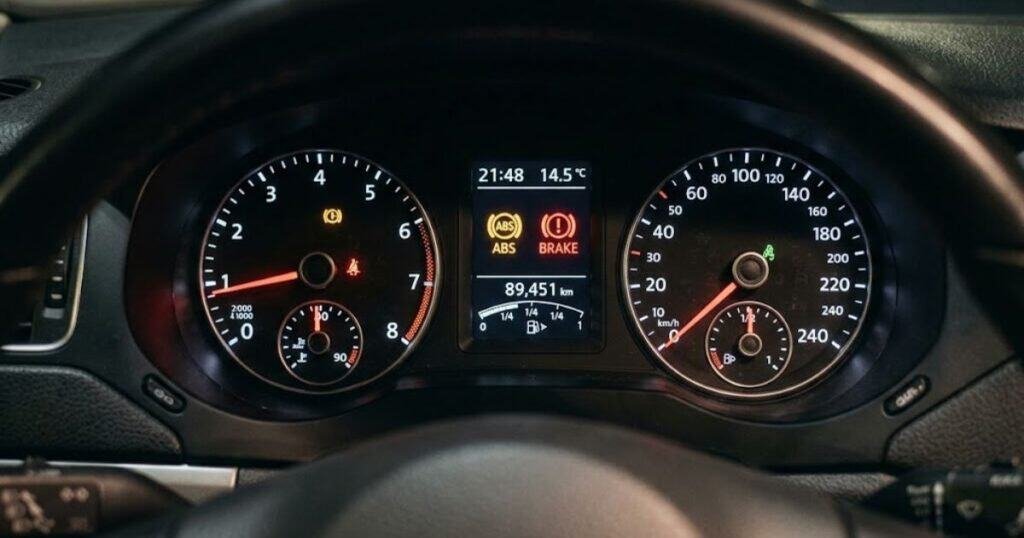
A few systems trip up Jetta owners specifically, more than owners of other VW models, because the Jetta’s compact engine bay packs several sensors close together.
Immobilizer Light
Flashes when the key’s chip isn’t recognized. Usually means a low key fob battery, interference from another key nearby, or a failing ignition module. Try a spare key before assuming the worst.
Fuel Cap Light
A loose or missing fuel cap can trigger both this light and, eventually, the check engine light through an evaporative emissions fault. Tighten the cap, drive a few cycles, and it usually clears on its own.
Particulate Filter Light (TDI models only)
Applies to diesel Jettas. Indicates the diesel particulate filter is clogged. Needs a highway drive to force a regeneration cycle, or professional service if the light stays on.
One honest caveat here: I’ve seen conflicting guidance across VW forums about how long it’s actually safe to drive with a solid EPC light. Some VW technicians say a few days is fine at reduced power. Others say get it towed same-day. My read, based on how the system is designed to fail safe by limiting power rather than cutting it entirely, is that a few days is generally fine unless the power reduction is severe or paired with another warning light.
What to Do When a Light Comes On
To respond correctly to a Jetta warning light, follow these steps:
- Note the color: green, yellow/orange, or red.
- If red, pull over safely and shut off the engine.
- If yellow, check your owner’s manual for that specific icon.
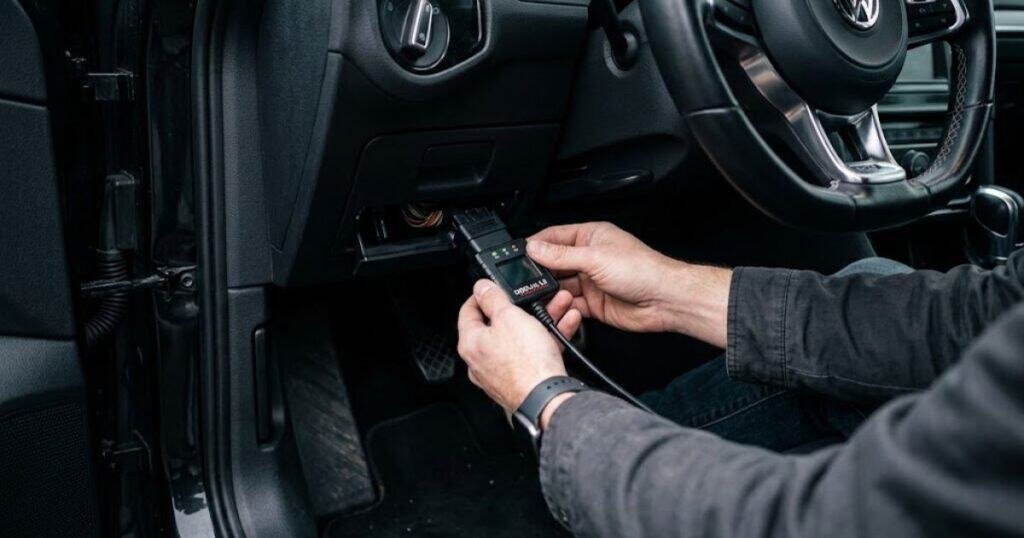
- Use an OBD-II scanner to pull the actual trouble code.
- Decide between a quick fix (like tire pressure) and a shop visit.
Quick Comparison
| Tool | Best For | Key Benefit | Limitation |
|---|---|---|---|
| BlueDriver | DIY diagnosis with detail | Reads VW-specific codes, not just generic ones | Costs more upfront ($100+) |
| FIXD | Casual owners, occasional checks | Cheap, simple phone app pairing | Less detail on manufacturer-specific codes |
| Free auto parts store scan | One-time check | No cost | Often only clears the code without explaining it |
| VW dealership diagnostic | Complex or recurring issues | Full manufacturer-level diagnostics | Most expensive option, usually $150+ just to look |
What most guides skip is that a cheap scanner pays for itself almost immediately once you own the car more than a year or two. A $60 to $100 tool that reads the actual code beats guessing based on a symbol shape every time.
MK6 vs MK7 Dashboard Differences
MK6 Jettas (2011 to 2018) versus MK7 Jettas (2019 and newer): the MK6 uses an older analog-style cluster with simpler amber icons, while the MK7 introduced a digital cockpit option with sharper, color-accurate icons and a few added lights for driver-assist features. The MK7 works better if you want lane-assist and adaptive cruise warnings built into the same cluster. The MK6 is simpler to read at a glance because it has fewer total icons competing for attention.
Specifically, MK7 models add lights for Lane Assist, Front Assist, and Adaptive Cruise Control that simply don’t exist on MK6 dashboards. If you’re troubleshooting a light on a 2016 Jetta and can’t find it in an MK7-focused guide (like most dealer sites publish), that’s often why.
This guide covers the light meanings that apply across both generations. It does not cover trim-specific driver-assist icon variations model year to model year. VW updates those regularly enough that a static list would go stale fast.
When a Light Means “Call a Shop” vs “Handle It Yourself”
Some owners prefer to handle everything short of red lights themselves. That’s a reasonable approach if you’re comfortable with a scan tool and basic maintenance. But if you’re not confident reading a code or you don’t have 20 minutes to spare checking tire pressure by hand, a VW-certified or independent European specialty shop will do it faster and catch anything adjacent to the original issue.
Users who’ve tried the DIY route often report the EPC and ABS lights are the two that most frequently need a second opinion, since both can throw a code that points to a sensor when the real issue is wiring or a connector.
Frequently asked questions
It typically points to a steering, ESP, or ABS-related fault. Check your owner’s manual for the exact icon shape to narrow it down.
You generally can’t turn it off manually. It clears once the underlying sensor or throttle issue is fixed and the code is reset.
No. A flashing light usually means an active misfire, which can damage the catalytic converter within minutes.
The system can take several minutes of driving to recalibrate. If it stays on longer than a day, a sensor may need replacement.
Any red warning light, especially oil pressure or coolant temperature, means stop the car in a safe spot right away.
The Bottom Line
Look, if you’re staring at a light right now and just need a fast answer: check the color first, then match the icon against this guide, then scan the actual code if it’s anything beyond a low-fuel or fuel-cap reminder. That sequence solves the vast majority of Jetta dashboard questions in under five minutes.
This guide works best for identifying what a light means and whether it’s urgent. It won’t replace an actual diagnostic scan for anything beyond the most common faults, and it doesn’t cover recall-specific warning lights, which VW communicates separately by mail or through the myVW app.